
 Continue with Apple
 Continue with Google
Fully Decentralized Crypto Casinos: The Exciting Future of Trustless Gambling

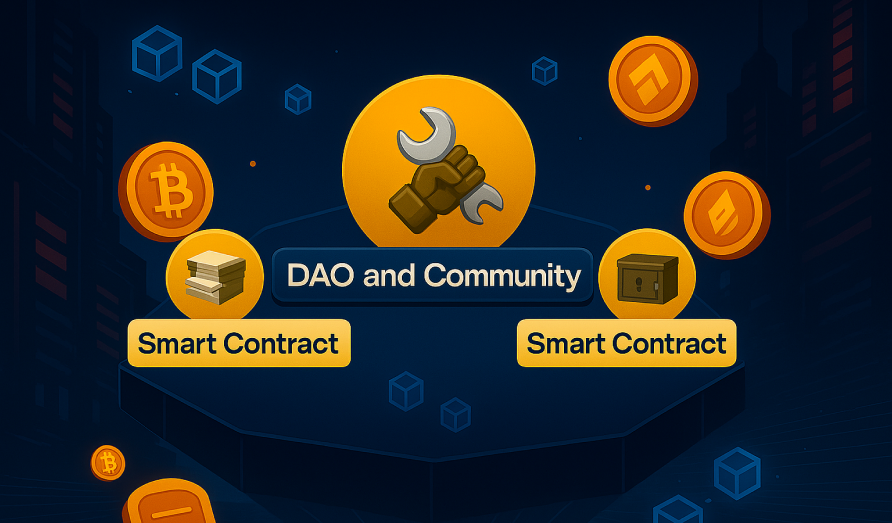
Gambling via Smart Contracts and Blockchain
In this original CoinBets guide, we’ll take a deep dive into the world of decentralized crypto casinos. We’ll look at how they function, their benefits, and the challenges they face. We’ll also check out some popular decentralized gambling platforms, offer security tips, and contemplate what the future holds.
What Are Decentralized Crypto Casinos?
Since the first online casinos launched in the mid-1990s, online gambling has grown into a huge global industry. Indeed, according to Statista, by 2029 it is projected over 290 million people will use online gambling sites and market volume will be around US$133 billion.
However, a new kind of online gambling site is poised to change everything: the fully decentralized crypto casino. These decentralized gambling platforms are dovetailing with DeFi (decentralized finance) protocols and opening up an entirely new frontier in gaming.
Traditional online casinos are, fundamentally, digital versions of land-based casinos. They are owned and operated by a company that is physically located in a specific place.
Conversely, genuinely decentralized casinos are owned by token holders, governed by DAO (Decentralized Autonomous Organizations), and located on the blockchain.
How Decentralized Crypto Casinos Work
Okay, first things first. There’s a lot of confusion out there when it comes to decentralized crypto casinos. In truth, most current crypto casinos are not fully decentralized — even though their marketing often suggests otherwise.
Partially Decentralized (Hybrid) vs Fully Decentralized Crypto Casinos
The most popular crypto gambling platforms like Stake, Roobet, and Gamdom, are still very much centralized casinos. Yes, they do incorporate decentralized elements, like provably fair gaming, crypto payments, and crypto token ecosystems. However, they are still owned and operated by centralized companies, and the majority of their games are based on traditional RNG (Random Number Generator) technology.
Even casinos and sportsbooks that largely rely on decentralized platforms for their operational functionality aren’t truly decentralized if they are controlled by a single entity. we’ll talk more about this when we look at specific platforms.
Strictly speaking, it’s more accurate to call them ‘hybrids’ or ‘partially decentralized’.
Sure, some are definitely more decentralized than others, but they are certainly not fully decentralized casinos. It’s very similar to the wider crypto space. All cryptos use blockchain technology, but tokens like Tether, USD Coin, and XRP are not decentralized in the way that Bitcoin or Ethereum are.
Truly decentralized casinos harness tech like smart contracts to automate processes and eliminate intermediaries altogether.
So, let’s take a look at the main components of fully decentralized online gambling platforms.
Smart Contracts
A smart contract is a self-executing contract with its terms written directly into code. These are used to automate everything from game logic and fund management to the distribution of winnings.
As soon as a player has placed a bet, a smart contract takes over. It will calculate the outcome, transfer funds, and execute payouts. Smart contracts are deployed directly onto the blockchain and operate autonomously.
Using smart contracts can completely eliminate the need for human intervention. This means players do not need to trust in any fallible third party, thus creating a truly trustless environment.
Blockchain Networks and Protocols
Although there are many blockchain networks, the majority of decentralized casinos operate on major networks like Ethereum, Solana, or Binance Smart Chain. Each blockchain has its own advantages and disadvantages, and choosing the right one for a project can be the difference between success and failure.
For example, Ethereum is by far the most well-established blockchain in decentralized gambling and gaming, with extensive smart contract support. However, despite improvements, it can still suffer from network congestion, leading to high gas fees and slow speeds.
On the other hand, Solana and Binance Smart Chain are much faster with lower fees but have smaller developer communities.
DAOs (Decentralized Autonomous Organizations)
At fully decentralized casinos, DAOs take the place of operating companies. They allow sites to be entirely governed by their communities. By holding governance tokens, users can participate in decision-making processes by voting on things like platform features, new games, and profit distribution.
The DAO model creates a sense of ownership and shared responsibility, naturally aligning the casino’s interests with those of its user base. If a platform isn’t owned and governed in a decentralized manner, then it can’t really be considered a fully decentralized online casino.
How Fully Decentralized
Casinos Work

DAOs
(Governance layer)
Community-led governance using voting tokens. Players help shape casino rules, updates, and decisions – no central authority.

Blockchain Networks
(Infrastructure Backbone)
Public blockchains like Ethereum or Solana run the platform – secure, transparent, and tamper-proof.

Smart Contracts
(Automation Layer)
Code replaces trust. Smart contracts handle games, bets, and payouts automatically – no human middleman.
Benefits of Fully Decentralized Casinos
Fully decentralized crypto casinos offer several advantages over both traditional and partially decentralized online platforms. Let’s look at them in more detail.
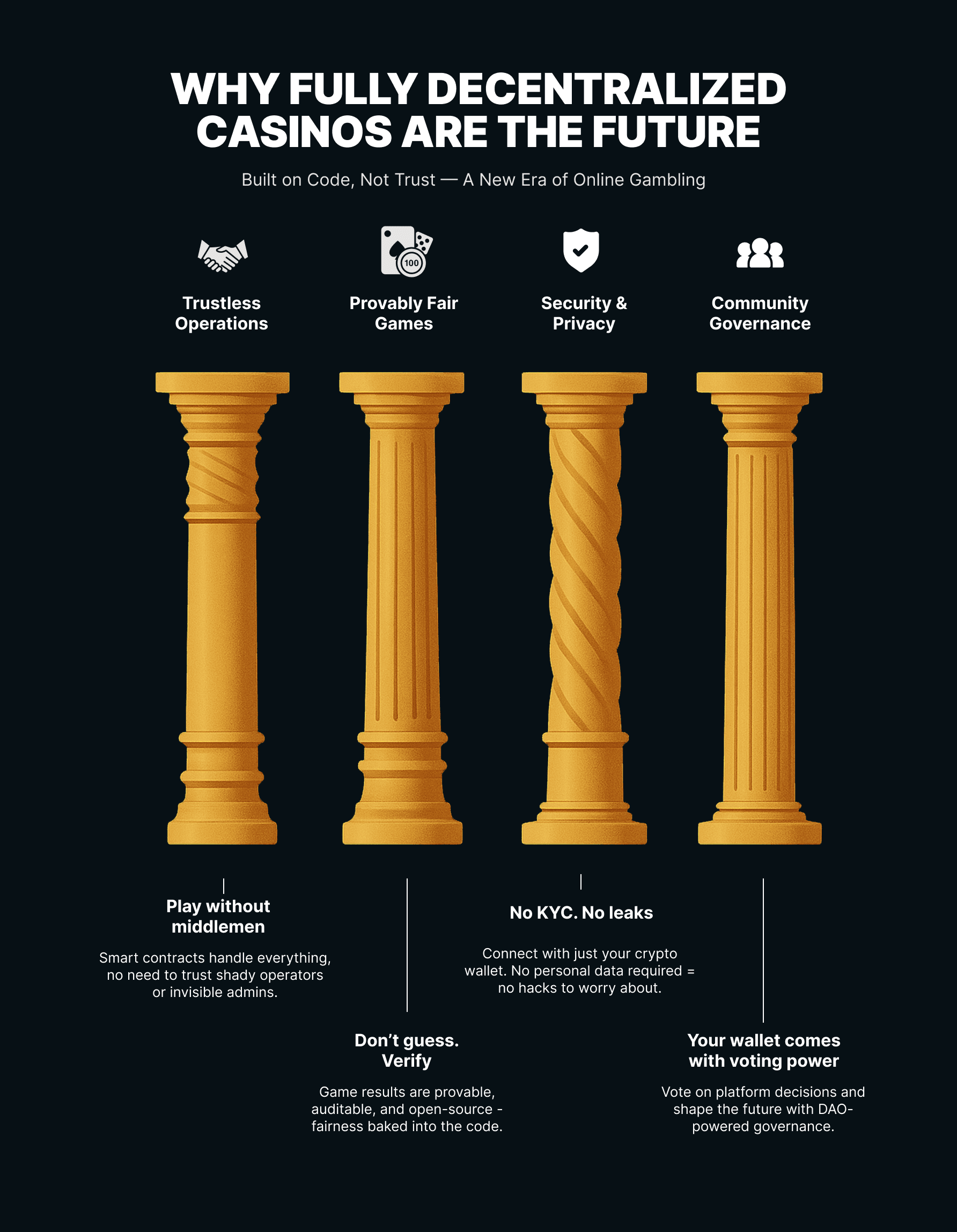
Trustless Operations
For most users, the trustless nature of a decentralized casino is the biggest attraction. Players no longer have to put their faith in an operating company — or the gambling authority that regulates them. And, let’s face it, historically, the online gambling industry hasn’t been the most trustworthy!
The smart contracts that manage everything from bet placement to payouts are unlikely to be corrupted because the code is open-source and publicly auditable. This trustless system creates a truly level playing field, guaranteeing transparency and fairness.
Provably Fair Games
Traditional online casino games like slots and video poker rely on random number generators (RNGs). These RNGs should be fair, and in most cases are — for example, operators licensed by the UKGC and MGA must undergo regular audits by accredited testing labs.
But, there is no way players can have absolute certainty. Of course, this is a particular problem with unlicensed casinos or those licensed in more lenient jurisdictions like Anjouan, Tobique or St Kitts.
However, provably fair games allow players themselves to verify the fairness of each outcome using cryptographic algorithms. As previously mentioned, partially decentralized casinos tend to offer some provably fair games, but at fully decentralized casinos all games are provably fair.
Enhanced Security and Privacy
Because decentralized casinos operate on blockchain networks, players can engage with them directly via a supported cryptocurrency wallet. This means there’s no need to provide any personal information, effectively eliminating the risk of identity theft and fraud.
Plus, the decentralized nature of blockchain-based platforms makes them inherently less vulnerable to hacks or data breaches. Even if a part of a network is compromised, operations can usually continue safely.
Community Governance
Centralized and partially decentralized casinos build player communities but users still have no real say in governance. However, because fully decentralized casinos are governed via DAOs, site users can directly influence decisions.
The amount of influence individual users have will typically depend on the number of governance tokens they hold. So, while those with most tokens can still dominate voting, decentralized casinos are more responsive to their users. Naturally, this is better for building a real sense of community.
Limitations of Fully Decentralized Casinos
However, it’s not all plain sailing for fully decentralized casinos. As with everything in the blockchain and crypto space, there are some nagging issues.
Let’s run through some of the most significant.
Scalability and Transaction Speed
Long one of the biggest challenges in the blockchain space, scalability is still an issue for decentralized casinos. This is especially true for those based on Ethereum — which has been a victim of its own success.
Precisely because Ethereum is so popular, the network can get extremely congested, leading to high transaction fees (gas fees), and slow speeds. This is especially problematic for things like low-value bets, which high gas fees can often render impractical.
However, other blockchains, like Binance Smart Chain, Solana, Polkadot, and Avalanche do offer compelling alternatives, and Layer-2 protocols and sidechains are being developed to address scalability issues on Ethereum.
Complex User Experience
As with any new technology, it takes some time for products to become truly user-friendly. In the decentralized technology space, this has been a prominent issue for some time now.
Large centralized platforms have entire teams dedicated to creating seamless user experiences. Everything is tested and refined to reduce friction as much as possible. Processes are distilled to simple, intuitive flows.
Meanwhile, decentralized platform users are left to figure out crypto wallets, manage private keys, use crypto exchanges, and navigate the complexities of blockchain transactions. This learning curve is proving to be a very sticky barrier to widespread adoption.
In part, this is because much of the innovation has come from individual developers, aka. ‘tech nerds’. They tend to build things that make perfect sense to them, but are opaque to the general population. Thankfully, as decentralized tech matures, user experiences are improving.
Regulatory Uncertainty
Fully decentralized casinos aren’t operated by an identifiable entity based in a specific geographical location. Hence, they are incompatible with traditional legal frameworks and jurisdictions. And although this is a problem common to all decentralized projects, including cryptocurrencies and DeFi platforms, there is still no international consensus regarding a sustainable way forward.
For now, while some countries have begrudgingly accepted the new crypto reality, authorities in others continue to make life difficult for decentralized projects. This means players in some locations may have to contend with ISP blocking and legal uncertainties when using decentralized online casinos.
Liquidity and Funding
Another potential issue for decentralized casinos is ensuring enough liquidity, especially to facilitate high-stakes betting.
Liquidity pools can help address this issue, but some decentralized platforms, especially smaller projects, can struggle. This can limit potential payouts and damage player confidence.
Challenges and Limitations of
Fully Decentralized Casinos

Liquidity and Funding
Limited Liquidity – Fewer funds in the system mean smaller bets, delayed payouts, and lower player trust.

Complex User Experience
Crypto Isn’t Plug & Play – Wallets, keys, and exchanges can overwhelm newcomers — it’s not as smooth as traditional logins.

Regulatory Uncertainty
No clear laws = legal gray zones, potential ISP bans, and uneasy players.

Scalability and Transaction Speed
Slow Chains, High Fees. Network congestion kills speed and spikes costs — especially on Ethereum.
Popular Fully Decentralized Crypto Casinos and Games
New decentralized gaming projects are being launched all the time, but let’s take a look at some of the leaders in the space.
Decentralized Crypto Casinos and Gambling Platforms
- Lucki.io
Rumored to be from the team behind Rollbit, this Solana-based casino claims to be fully decentralized, with games running on the Proov protocol. The platform offers dozens of provably fair games, including original slots. - Decentral.Games
Built on the Ethereum network and governed by a DAO, Decentral Games bills itself as ‘the first Metaverse casino.’ It currently offers blackjack, roulette, and Texas Hold’em poker and also enables players to earn rewards through staking. - Edgeless
Another Ethereum-based decentralized casino, as the name suggests, Edgeless offers provably fair games with a 0% house edge. Available games include slots, blackjack, roulette, dice, and video poker. Whether Edgeless is actually fully decentralized is debatable. The site itself refers to an operating company and Curacao gaming license. - FunFair
FunFair Technologies offers a decentralized gaming platform that operates using the FUN token. This Ethereum-based platform is marketed as a ‘white label’ solution, meaning casino operators can build their brands on it. Again, while most of the operational aspects are decentralized, casinos using this platform aren’t technically fully decentralized because they are run by traditional companies. - DAO.Casino
Founded in 2017, DAO Casino is based on the Ethereum blockchain and provides a trustless platform where all game logic is executed by smart contracts. It is an open ecosystem allowing developers to build their own games and offer them in an open marketplace. - Wagerr
A decentralized sports betting platform built on its own blockchain, Wagerr uses a peer-to-peer betting model. The WGR token has a dynamic supply, with placed bets burned and winning bets minted.
As previously mentioned, it can be difficult to establish whether a casino is fully decentralized or not. For example, if you Google or ask ChatGPT for “decentralized crypto casinos”, you’ll get results like BetFury, EarnBet, and TG.Casino. And, while all of these do feature blockchain-based elements, including native crypto tokens, they are all owned and operated by centralized companiesDespite this, some try to give the impression they are fully decentralized crypto casinos. For example, in the case of BetFury, the operating company isn’t listed anywhere in the footer. But, if you refer to the Privacy Policy, you’ll discover the platform is owned by Universe B Games B.V., a limited liability company registered in Curacao.
In a nutshell, if you can find details of an operating company, then even if there decentralized elements, it is not fully decentralized. On the other hand, finding details about a DAO is a good indicator that it is decentralized.

Decentral Games
Ethereum Metaverse casino
Blackjack, Roulette, Texas Hold’em
Staking = rewards

Edgeless
0% house edge
Provably fair games
Slots, Blackjack, Dice

Funfair
Ethereum casino engine
Powered by FUN token
B2B white-label ready

DAO Casino
Trustless Ethereum platform
Dev-friendly ecosystem
Community-built games

Wagerr
Own blockchain
Peer-to-peer betting
Uses WGR token
Decentralized Crypto Casino Games
At fully decentralized crypto casinos, you’ll find a variety of blockchain-based provably fair games. Some of the most popular include:
- Dice – Simple betting on the probability of the outcomes of dice rolls
- Roulette – Provably fair versions of a casino classic, often featuring a slider rather than a wheel
- Blackjack – Blockchain-based versions of the world’s favorite table game
- Slots – Usually much simpler than regular online slots, and often based on the classic fruit machine / one-armed bandit. They are still relatively rare at decentralized crypto casinos.
- Crash – Multipliers increase the longer the thing flies, but you need to cashout before it crashes (or speeds away)
- Video Poker – Provably fair versions of hugely popular card games like Texas Hold’em
- Wheel Games – Bet on which section of the wheel the pointer will land on
- Mines – How many tiles do you think you can uncover before striking a mine?
Compared to traditional online casino games, these provably fair titles tend to be very simple in terms of graphics, mechanics, and features. Think of them as ‘bare bones’ or ‘stripped down’ versions of those you’re used to seeing.
These games also can also differ from traditional online casino games in terms of RTP/house edge. The operating costs of truly decentralized crypto casinos, run by DAOs, can be much lower than a traditional or hybrid online casinos, thus allowing for higher RTPs.
NFT-based games and features are also available at some decentralized crypto casinos (for example, MetaWin). These allow players to own in-game assets or unlock special features using non-fungible tokens (NFTs). Thanks to blockchain-based ownership, players can buy, sell, and trade assets on decentralized marketplaces.

Security Measures and Best Practices for Players
Fully decentralized crypto casinos offer enhanced security compared to traditional online casinos. Even so, there are some things you should keep in mind to stay safe:
Wallet and Key Management
Always use reputable, secure non-custodial cryptocurrency wallets and follow best practices for managing your private keys.
- For maximum security, consider using hardware wallets like Ledger or Trezor.
- Remember, that if you lose your private keys/recovery phrase, you will lose access to your wallet.
- Make sure you store your private keys/recovery phrase somewhere safe. They need to be able to survive things like fires and floods.
- If you suspect your wallet password has been compromised, change it immediately.
- Consider maintaining several different crypto wallets, and spread your balance between them.
- Never leave large balances of crypto on centralized exchange wallets like Binance, Kraken, Coinbase, etc. (remember what happened to FTX), casino wallets like Gamdom’s Vault, or on browser-based Web3 wallets like MetaMask.
Verifying Smart Contracts
Smart contracts are fundamental to the operation of decentralized crypto casinos. However, poorly coded or outdated smart contracts can be exploited by bad actors.
So, before using decentralized crypto casinos, you should check that smart contracts have been audited by reputable firms (you’ll usually see logos and links in the footer). Of course, you can also monitor on-chain data and verify the provably fair games yourself.
Participate in DAOs Safely
While being part of a DAO can be a rewarding experience, giving you a real say in a platform’s governance, you should be careful. Only get involved once you have fully understood the mechanics of decentralized voting and profit distribution.
Any genuine DAO should provide a white paper detailing how it works and long-term plans for the project. Remember, whenever you are staking or providing liquidity at a decentralized platform there are both potential rewards and risks.
Security Measures and Best Practices for Players
Use Hardware Wallets
Hardware wallets offer the strongest protection against hacks and phishing.
Wallet and Key Management
Always use wallets you control—avoid custodial platforms when possible.
Safe Storage of Keys/Recovery Phrases
Back up your recovery phrase offline in a tamper-proof, waterproof format.
The Future of Decentralized Crypto Casinos and Gambling Platforms
As blockchain technology becomes more mainstream, the future of decentralized crypto casinos looks very promising. Here are a few things likely to transform the industry over the coming years.
Innovations in DeFi and Casino Integration
The integration of DeFi elements into decentralized gambling platforms will continue to open up new possibilities. Liquidity pools, staking, and trading casino tokens on decentralized exchanges (DEXs) will allow players to gamble and earn simultaneously.
However, the availability of things like crypto loans at some casinos may also encourage irresponsible gambling.
Expansion of Blockchain Protocols
While scalability has long been an issue for blockchain adoption, another stumbling block has been cross-chain compatibility. Projects were largely limited to their own network ecosystem.
The development of cross-chain projects like Polkadot, Cosmos Network, and Wanchain, along with blockchain bridges like Ren network and the ERC-20 Wrapped Bitcoin, are helping to address this.
These, along with Layer 2 solutions to improve scalability, will make fully decentralized crypto casinos and gambling platforms more accessible. They will also lower costs, provide better performance, increase available liquidity, and enable decentralized casinos to better compete with traditional platforms.
Increasing Community Ownership
As we’ve seen, at present there are very few truly fully decentralized crypto casinos. Even those integrating significant decentralized technologies are usually owned by a traditional operating company.
However, as decentralized crypto casinos continue to evolve and blockchain technology becomes more accessible, we’ll see an increasingly democratized online gambling experience. Within a few years, a significant percentage of online casinos and prediction market platforms could be fully peer-to-peer, player-owned and player-governed platforms.
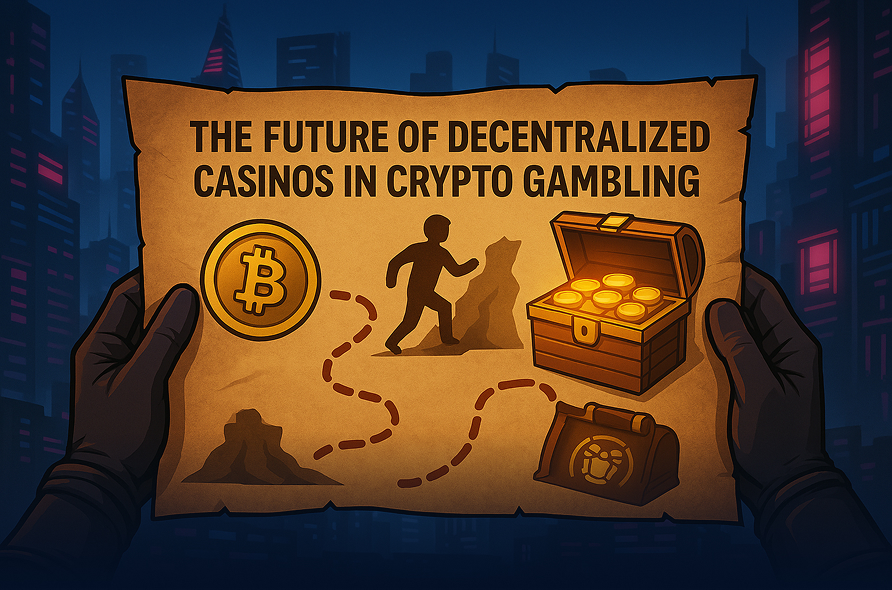
Roadmap
The Future of Decentralized
Casinos in Crypto Gambling
Phase 1 – Innovation

Seamless integration of staking, lending, and yield mechanics into gameplay. More ways to earn, but also new layers of risk.
Phase 2 – Expansion

Faster networks and cross-chain compatibility will reduce fees, boost speed, and attract larger player pools.
Phase 3 – Community

DAOs and tokenized governance turn players into decision-makers. You don’t just play — you help shape the platform’s future.
The Next Evolution in Crypto Gambling:
Decentralized. Scalable. Player-Governed.
Final Thoughts About Fully Decentralized Casinos
There’s no doubt that fully decentralized crypto casinos offer a compelling alternative to traditional online gambling platforms.
Things like trustless operations, provably fair games, and community governance have immense potential. But there remain many issues, like scalability, regulatory ambiguity, and user experience. Clearly, these will need to be addressed before fully decentralized gambling goes truly mainstream.
In the meantime, players in the crypto casino space should be aware of the type of casino they are really playing at. The majority of ‘decentralized crypto casinos’ are not fully decentralized. They are operated by gambling companies who’ve figured out a way to sound cool, cut costs, and exploit the crypto gambling hype.
All things considered, we’re still in the early stages of the blockchain and decentralization era. Eventually, most gambling will happen on truly decentralized crypto casinos that are owned and governed by their users — the core benefits are just so compelling.
The question is, how long will it take us to get there?
We hope you’ve found this original CoinBets.com guide interesting. And as always, f you’ve got any thoughts, we’d love to hear them below.
Join The Conversation
No comments yet. Be the first to comment!

Comments (0)
Share