
 Continue with Apple
 Continue with Google
Crypto Esports Betting: An Introductory Guide

Everything You Need to Know About Esports Betting
To help you get to grips with the essentials of this exciting space, we’ve put together this original CoinBets.com crypto esports betting guide. Carry on reading to learn about everything from the mechanisms of crypto betting and popular game titles to tips for keeping safe and gambling responsibly.
The Rise of Esports and Its Betting Scene
Over the past few years, esports and cryptocurrency have both grown from niche interests to mainstream phenomena. And with them both emerging from the same digital-savvy generation, it’s only natural that they are increasingly interacting via crypto esports betting.
Esports is simply organized competitive video gaming. Although it can trace its roots back to the very first gaming machines of the 1970s, it didn’t become viable as a mass sport until the early 90s. At that time online gaming was still a dream, but Nintendo and Sega gaming consoles allowed enthusiasts to organize LAN (local area network) tournaments. Typically, they were only competing for kudos or very modest prizes.
However, with the proliferation of broadband internet access during the 2000s, esports began to gain traction and grow steadily. In those early days, Asia stole a lead on the West, with the South Korean government officially recognizing esports as early as 2000.
By the mid-2010s, a robust esports ecosystem had developed, centered around games like League of Legends, Dota 2, and Counter-Strike: Global Offensive. Live events were attracting thousands of fans, and millions watched live-streamed tournaments. Illustrating this, in 2017, the Intel Extreme Masters in Katowize, Poland, attracted more than 45 million viewers.
From Skin Betting to Real Money Betting
Very early esports betting was dominated by so-called ‘skin betting’ — where players would wager in-game digital items instead of cash. These items could be sold for cash later, but by not betting with real money, the process could take place on unregulated and unlicensed sites.
This led to serious issues with underage gambling and drew harsh criticism from the press and politicians. Eventually, the situation came to a head when Valve, owner of Steam — the largest online gaming platform — banned third-party sites from letting people wager Steam items.
Established Bookmakers find Esports Hard to Crack
With growing demand and concerns around skin betting, several real-money esports platforms like Loot and Rivalry entered the scene. However, most large established bookmakers were either entirely dismissive of or slow to embrace esports betting. Of course, there were exceptions to this — with mainstream betting sites like Curacao-based Pinnacle investing heavily in esports from around 2020.
One of the biggest challenges for betting operators has been establishing a rapport with esports fans, who tend to have very different mindsets from traditional sports bettors.
As a rule, they are younger and haven’t previously gambled for real money. Their pre-existing perceptions of the gambling industry are often negative, and they tend to be very defensive of esports. Basically, they don’t want to see it become overly commercialized like traditional sports are. To many esports fans, authenticity is everything.
While these things were understood by the smaller, specialist esports betting operators, some mainstream operators found things out the hard way. The best example of this was the collapse of EEG (Esports Entertainment Group) — the US-based company behind the short-lived esports betting platform Vie.gg.
Despite its name, EEG’s leaders and investors were very much from the traditional online gambling industry. Although it was well-funded, their tone deaf approach meant EEG was shunned by esports fans and quickly ran into financial difficulties.
Why Crypto and Esports Go Hand-in-Hand
By the end of the COVID-19 pandemic (which significantly boosted video gaming and esports), most mainstream sportsbook operators were offering esports betting. And crypto betting sites were starting to steal a lead.
The overlap between esports and cryptocurrency is the natural result of demographics and qualities. Both sectors share fan bases of tech-savvy, internet-native users, and both are fundamentally digital and decentralized, transcending geographical boundaries. Also, both crypto enthusiasts and, as EEG found out, esports fans, tend to be highly suspicious of corporate businesses.
Hence, by enabling users to bypass the traditional financial system, cryptocurrency has become a natural choice for esports bettors.
The Evolution of
Esports and Betting
Early Days of Esports

LAN Party Era (1990s)
Where it all began – local multiplayer battles, dial-up modems, and bragging rights.
The Rise of Esports

2000s–2010s: The Streaming Boom
Massive growth powered by Twitch, pro teams, and million-dollar tournaments.
Esports Betting
2020s: From Skins to Crypto
Unregulated skin gambling gave way to licensed real-money and crypto platforms.
What is Esports Betting?
Esports betting is fundamentally the same as traditional sports betting. Bettors place wagers on the outcomes of competitive matches or tournaments. As with sports betting, esports bettors can wager on a variety of outcomes, ranging from which team will win a match, to specific player scores or achievements.
However, you’ll find some esports bets are a little different from those in traditional sports. For example, it’s highly unlikely (hopefully) you’ll ever bet on how many kills a player will accumulate during a game of soccer!
Because of the variety and digital nature of video games, the scope of esports betting is truly vast and lends itself particularly well to in-play betting. That’s why most platforms offer live betting in addition to pre-match bets.
Microbetting is also very well-suited to esports. The vast amounts of granular data generated by video games allowing almost infinite real-time betting opportunities.
Esports Betting Growth Trends
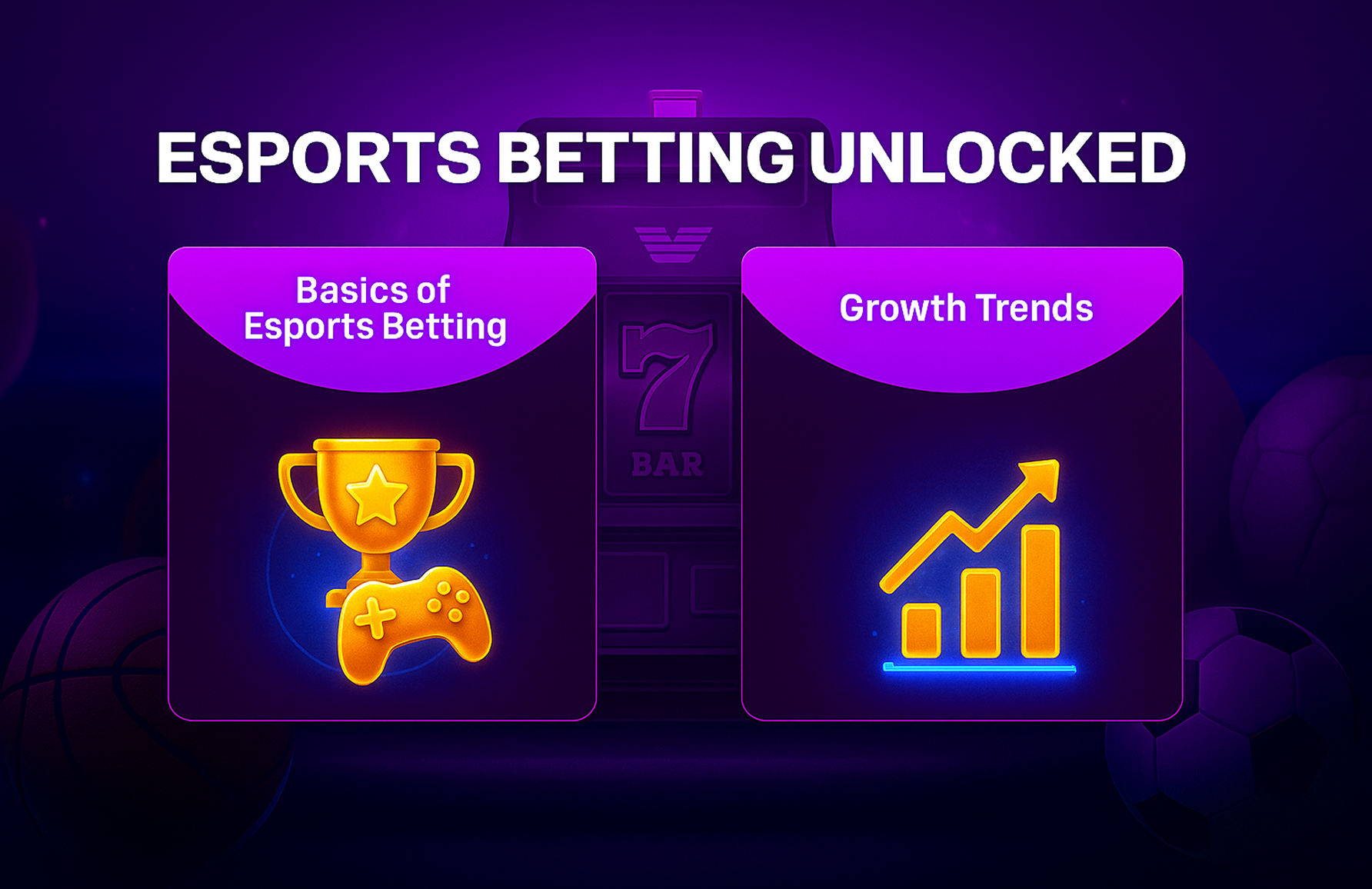
Over recent years, esports betting has grown significantly, both in terms of popularity and money wagered.
Illustrating this, according to Statista, in 2017 global esports betting revenue stood at $0.6 billion, was on track to hit $2.5 billion by the end of 2024, and is projected to reach $3.5 billion by the end of 2029. Of course, this is still small compared to traditional sports betting. By comparison, the US online sports betting market alone is expected to reach over $45 billion in 2024 — but it’s still very dramatic growth.
As previously mentioned, COVID-19 was responsible for boosting growth, especially during 2020 when so many traditional sports events were canceled. But, the growing number of adults who regularly play video games, coupled with the constant release of new titles, looks set to continue fueling the growth of esports betting.
Cryptocurrency in Betting
Cryptocurrency, or ‘crypto’ as it’s widely known, is a form of digital currency that employs cryptography to make it secure. Cryptocurrencies operate on decentralized blockchain-based networks — ledgers enforced by widely distributed networks of computers. This is in stark contrast to the highly centralized fiat currencies issued by central banks, like the US dollar, euro, and pound sterling.
The biggest cryptocurrencies by market volume are Bitcoin (BTC) and Ethereum (ETH), though there are also thousands of other cryptos — referred to as ‘altcoins.’ Popular altcoins include Binance Coin (BNB), Solana (SOL), XRP (XRP), Dogecoin (DOGE), TRON (TRX), Cardano (ADA), and Avalanche (AVAX).
Stablecoins like Tether (USDT) and USD Coin (USDC), which are pegged to fiat currencies like the US dollar, are also widely used.
Advantages of Using Cryptocurrencies in Esports Betting
Regarding betting specifically, using cryptocurrencies offers users several key advantages over traditional fiat currencies:
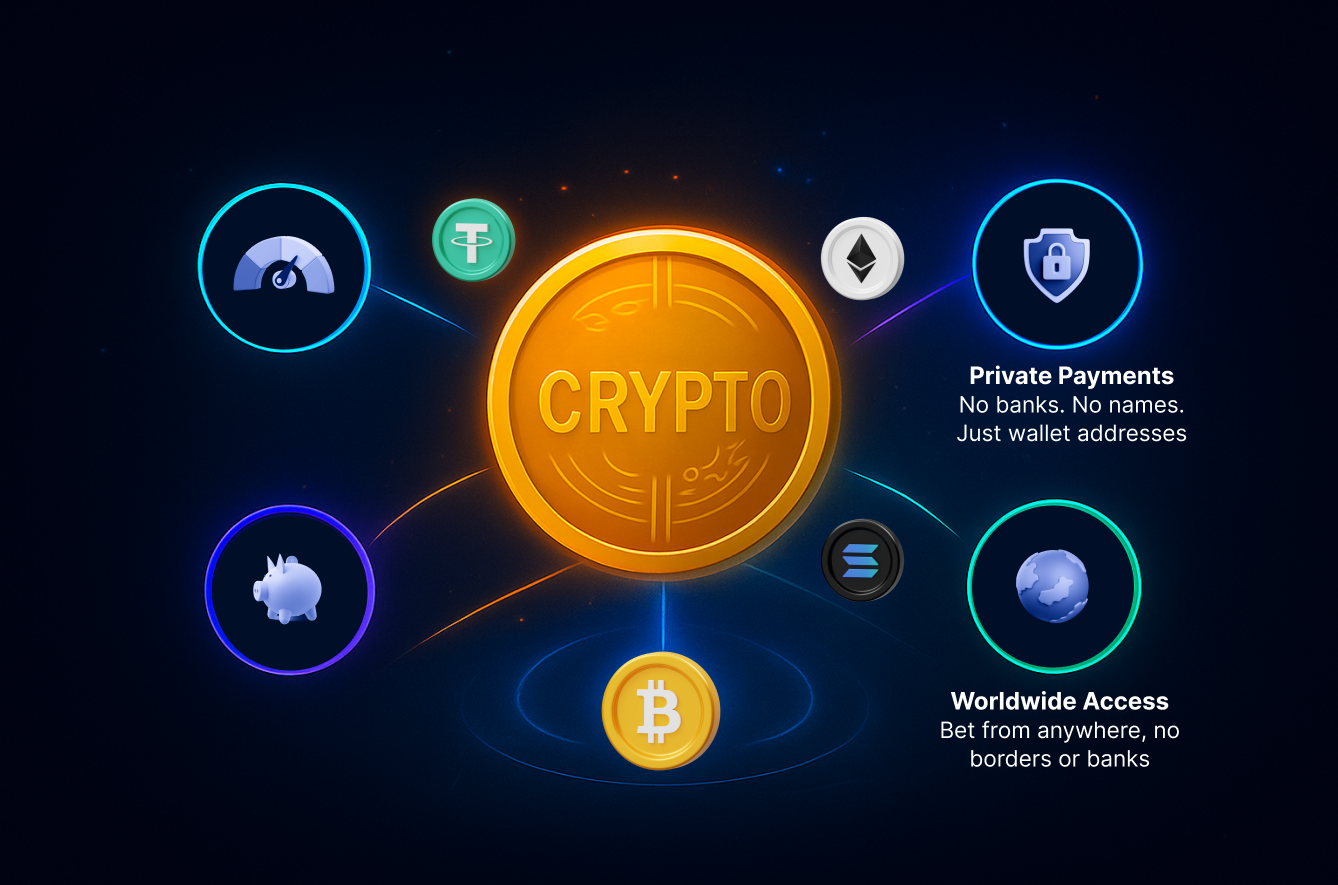
- Faster Transactions: Crypto transactions are typically processed faster than traditional payment methods like bank transfers — allowing bettors to deposit and withdraw funds virtually instantly.
- Lower Transaction Fees: Cryptocurrency transactions are usually subject to lower transaction fees than traditional payment methods like credit cards. However, fees will vary considerably between cryptos and depend on things like network usage.
- Increased Privacy: Most cryptos offer a much higher degree of anonymity and privacy than traditional payment methods. To process a crypto transaction, the only information usually required is a crypto wallet address.
- Global Accessibility: Cryptocurrencies are censorship-resistant and borderless. This means people can bet from anywhere in the world, without worrying about things like currency conversions or local regulations.
Popular Games in Crypto Esports Betting
Many video games have dedicated followings and competitive esports scenes, but the following titles are especially popular for crypto esports betting:
- League of Legends: A multiplayer online battle arena (MOBA) game where two teams of five players each compete to destroy the opponent’s Nexus (base).
- Dota 2: Another MOBA game, similar to League of Legends but with its own unique mechanics and a highly competitive international scene, including The International, one of the largest esports tournaments.
- Counter-Strike: A first-person shooter game in which two teams — terrorists and counter-terrorists— compete in various objective-based game modes.
- Valorant: A tactical first-person shooter game, blending elements from games like CS:GO and Overwatch, where players must work together to complete objectives and eliminate the opposing team.
- Fortnite: A battle royale game where up to 100 players fight to be the last person standing. It’s popular for its engaging mechanics and crossover appeal with popular culture.
- Rocket League: A high-octane game that combines soccer with vehicular mayhem, where teams of players control rocket-powered cars to score goals.
- Honor of Kings: A multiplayer online battle arena (MOBA) game that is particularly popular in China, where it boasts a massive esports following.
- Rainbow 6: A tactical first-person shooter that emphasizes strategic team play, with players working together to either defend or attack objectives.
- NBA 2K: A basketball simulation game complete with competitive leagues and esports tournaments. It has developed a strong presence, especially with events like the NBA 2K League.
- Overwatch: A team-based first-person shooter that features a diverse cast of characters, each with unique abilities, as teams compete to achieve various objectives. The Overwatch League serves as a premier competition.
Top Games in the Crypto
Esports Betting Arena

League of Legends 🔥 Top Bet Game

Valorant 🎯 Fan Favorite

Honor of Kings 🌏 Asia-Dominant Title

DOTA 2 🔥 Top Bet Game

Fortnite 💥 Event-Based Bets

Rainbow 6 🧠 Tactical Matchups

Overwatch 🎯 Fan Favorite

Counter-Strike 🔥 Top Bet Game

Rocket League 🎮 Fast-Paced Matches

NBA 2K 🧪 Experimental Market
Types of Bets
Broadly speaking, most esports bets fall into one of these categories:
- Match Outcome: Betting on the result of a single match, usually between two teams.
- Tournament Winner: Wagering on which team will win an entire tournament.
- In-Game Events: Betting on specific occurrences within the game, such as the number of kills, first kill, total score, etc.
- Prop Bets: More specific and unusual bets, often tied to in-game events that are not directly related to the match outcome.
How to Get Started with Crypto Esports Betting
Righty, so you want to give it a go? Great, here’s a simple guide to how to bet on esports with crypto. It’s worth taking the time to read everything — it could save you major headaches later.
Choosing a Betting Platform
First things first, you’ll need to find a platform to bet at. However, while most sportsbooks include esports, it can be worth finding a specialist site.
Here are some key factors to consider:
Security
Ensure that the platform uses strong encryption and other security measures to protect user data and funds.
Check that the security certificate for the site is valid, and look for a gambling license from a reputable regulator like the UK Gambling Commission (UKGC), Malta Gaming Authority (MGA), Curacao Gaming Authority (CGA), or New Jersey Division of Gaming Enforcement (DGE).
Reputation
Research user reviews (like those right here at CoinBets) and community feedback to ensure the platform has a positive track record. Check a variety of sources and remember many reviews may be fake or lack objectivity. For example, those from sore losers, affiliate marketers, or even shady competitors.
Game Choice
Choose a platform that offers a wide range of games and betting options so you can bet on your favorite esports. Generally speaking, specialist esports betting platforms will offer more choice and better odds.
User Experience
Look for a platform that is well designed, easy to navigate and offers plenty of guides and information. Esports betting should be entertaining, not frustrating.
Bonuses and Promotions
Many platforms offer bonuses or promotions for new users. These can be great, but make sure the terms and conditions are easy to find, clearly written, and fair.
Setting Up an Account
Once you’ve selected a platform, getting up and running is usually straightforward. Here’s a step-by-step guide:
- Register: Sign up by providing an email address or linking your account to a Web3 cryptocurrency wallet like MetaMask or Solflare.
- Deposit Funds: Choose the cryptocurrency you’d like to use (Bitcoin, Ethereum, Litecoin, etc.) and send funds to your casino wallet. Be sure to follow the instructions carefully, and opt-in to any bonuses you want to use (read the T&Cs first, of course).
- Explore the Platform: Before placing any bets, familiarize yourself with the platform’s interface. Look for sections that show upcoming matches, live betting options, and different types of bets you can place.
- Place a Bet: Once you’re feeling comfortable, you’re ready to place your first bet. Initially, we recommend placing small wagers – this will allow you to gain experience without risking much.
Your Step-by-Step Guide to Crypto Esports Betting

Find crypto-friendly platforms with strong esports coverage.

Register with email or connect MetaMask/Web3 wallet instantly.

Choose your coin (BTC, ETH, USDT) and fund your account.

Learn where to find matches, odds, and live betting options.

Place a micro-bet on your favorite esports match.
Tips for Safe Betting
For most people, betting on esports with crypto is a thoroughly enjoyable experience, but it’s important
Responsible Gambling
For most people, betting on esports with crypto is a safe experience, but it’s important to be aware of the risks. Any form of gambling can be addictive, and it can be difficult to recognize when things are getting out of hand.
Here are some safer gambling tips to keep in mind:
- Set Limits: First and foremost, never bet more than you can afford to lose. Decide how much you can safely bet ahead of time, and stick to that limit. If you lose your bankroll, walk away — never be tempted to chase your losses.
- Take Breaks: Esports betting can be exciting, but it’s important not to make emotionally driven decisions. Take regular breaks and clear your mind so that you can make rational choices.
- Educate Yourself: Before placing bets, make sure you have a good understanding of the game you’re betting on, as well as the teams and players involved. Until you’re confident, avoid placing large wagers.
- Seek Help if Needed: If you need help, don’t wait, act immediately. There’s no reason to feel ashamed — there are some great organizations and resources out there.

Security Tips
Using a legitimate esports betting site is usually safe, especially when you’re depositing and wagering with crypto. However, as with any online activity, you should always take some basic precautions to protect yourself and secure your crypto:
- Use Strong Passwords: Set a strong, unique password for your betting account, and don’t use the same (or very similar) passwords across multiple sites.
- Enable Two-Factor Authentication (2FA): Many platforms offer 2FA, like SMS/email codes or apps like Google Authenticator — using them can make your account much less vulnerable to hacking.
- Verify Platform Security: Ensure that the betting site uses encryption and other security measures to protect your funds and personal information. Check the security certificate, gambling license, and company information.
- Stay Informed: Keep an eye on updates from any platforms you use, and on news from the wider crypto and esports betting space. This will help you be aware of any potential threats.

Esports Crypto Betting Risks and How to Mitigate Them
While they offer plenty of advantages for esports bettors, cryptocurrencies do introduce some additional risk. Here are the main issues to be aware of:
- Volatility of Cryptocurrencies: As you’ve probably noticed, even the most established cryptos like Bitcoin can fluctuate wildly in price. This gives the potential for the value of your winnings to change between the time you place a bet and the time you withdraw.
- Regulatory Considerations: In some countries, the laws applying to cryptocurrencies and their usage are still unclear (or non-existent). Always check the legalities and regulations in your region before you engage in crypto esports betting.
To learn more about the potential risks of using crypto, check out the CoinBets guide Cryptocurrency Fluctuations and Gambling: Strategies to Mitigate Risk.
The Future of Crypto Esports Betting
With the rapid concurrent growth of esports betting and cryptocurrency adoption, here are some things that will likely shape the future:
- Blockchain Integration: Crypto tokens and blockchain will enable truly decentralized peer-to-peer betting. This will become a dominant trend in both esports and traditional sports betting.
- Artificial Intelligence: AI will enable everything from truly generative game worlds and real-time micro-betting to ultra-personalized marketing and rewards.
- New Game Titles: More games will enter the competitive scene, offering new opportunities for bettors. For example, in 2024, NetEase Games announced its intention to create an esports ecosystem for its new title Marvel Rivals.
- NFTs and Esports: Some platforms are experimenting with incorporating non-fungible tokens (NFTs) into the esports betting ecosystem, potentially allowing bettors to own unique digital assets tied to their favorite teams or players.
- Virtual Reality: Eventually, we’ll even see the integration of Virtual Reality (VR) games into the esports scene, adding an entirely new level of engagement potential.

Conclusion
The fusion of cryptocurrency and esports betting, driven by their shared digital-first communities, marks a natural evolution for both. And, as the popularity of esports continues to grow, and more people discover the advantages of crypto, the future looks very bright.
If you’re new to the scene, things can look daunting. And there is a lot to learn. But by getting to grips with the basics, choosing a good platform, and betting responsibly anyone can enjoy exploring this exciting new frontier in gambling.
We hope you’ve found this CoinBets.com crypto esports betting guide interesting, and if you’ve got any related experiences you’d like to share with us, we’d love to hear from you.
Join The Conversation
No comments yet. Be the first to comment!

Comments (0)
Share