





 Continue with Apple
 Continue with Google
How Online Slots Work and the Unique Features of Crypto Slots
It’s easy to take the tens of thousands of online slots available today for granted. After all, at the best crypto casinos, you can sign up and be spinning and winning within seconds. But, there’s actually quite a lot to the slot game - and the latest generation of crypto slots are bringing even more features and fun to the party. So, in this original CoinBets guide, I’ll be taking an in-depth look at exactly how online slots work, and the exciting unique features offered by crypto slots.
How it All Began: The History of Slots
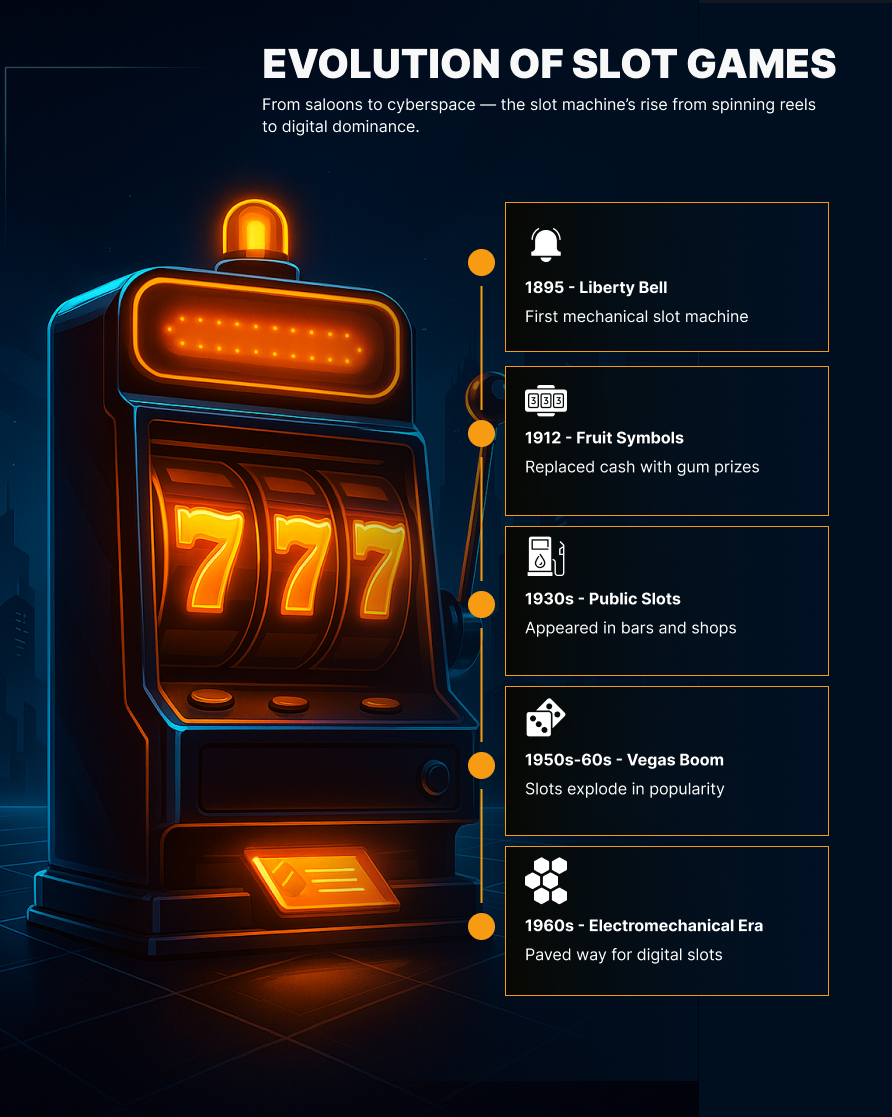
Today’s feature-packed online slots are a world away from the humble mechanical devices of the late nineteenth and early twentieth centuries. Indeed, the first real slot machine, invented in 1895 by San Francisco mechanic Charles Fey, featured just three reels and a single payline, whereas today, slots featuring mechanics like Megaways feature thousands of paylines. And, let’s not forget the myriad of special symbols, bonus rounds, video game-style graphics, and slick soundtracks.
During the early 20th Century, several different companies began marketing mechanical gambling machines - especially in the US. The “Operator Bell” invented by Herbert Mills of Chicago (who some allege stole his idea from Charles Fey) would prove particularly significant. In 1912, Mills teamed up with a chewing gum company and formed the Bell-Fruit Gum Company. With real money gambling prohibited in many states, counties, and cities, Mills and his partners realized they would be able to sell the machines to a much bigger market if winnings were paid out in chewing gum rather than coins.
From Fruit Machines and One-Armed Bandits
At the time, the most popular flavors of gum were cherry, lemon, orange, melon, and other fruits, so the card symbols were switched with fruit symbols, hence the machines earned the nickname “fruit machines” - something they are still commonly called in Britain. The BAR symbol, which can still be found on fruit slots to this day, also originates from this period - being a logo used by the Bell-Fruit Gum Company - as does the bell symbol. By the 1930s, these mechanical fruit machines were found in stores and gas stations all across America. Today they are sought-after collector's items - here’s an example of a Bell Fruit Gum machine that was auctioned.
As time went by, the demand for real money slot machines grew, and in places where they were legal, increasingly complex cabinet-based gambling machines became popular. With the growth of places like Las Vegas into gambling resorts in the 50s and 60s, slot machines became a mainstay on the casino floor - offering a much more efficient use of space for casino operators than blackjack and roulette tables. At the same time, a new term became widely adopted for slot game cabinets at casinos - the “one-armed bandit”. The “one-armed” referred to the large arm at the side of the cabinet that players pulled to trigger the mechanism, while the “bandit” bit derived from the machines’ uncanny ability to empty players’ pockets.
Interestingly, even after the introduction of true electromechanical slot machines in the 60s (the first being the famous “Money Honey” from Bally), many designs retained the mechanical lever on the side. Research had shown that many players felt more confident playing machines with a lever because they felt they had more control over the results - which is entirely untrue, but hey, the casinos were more than happy to let people think it.
From Dial-Up Casinos to Crypto Slots
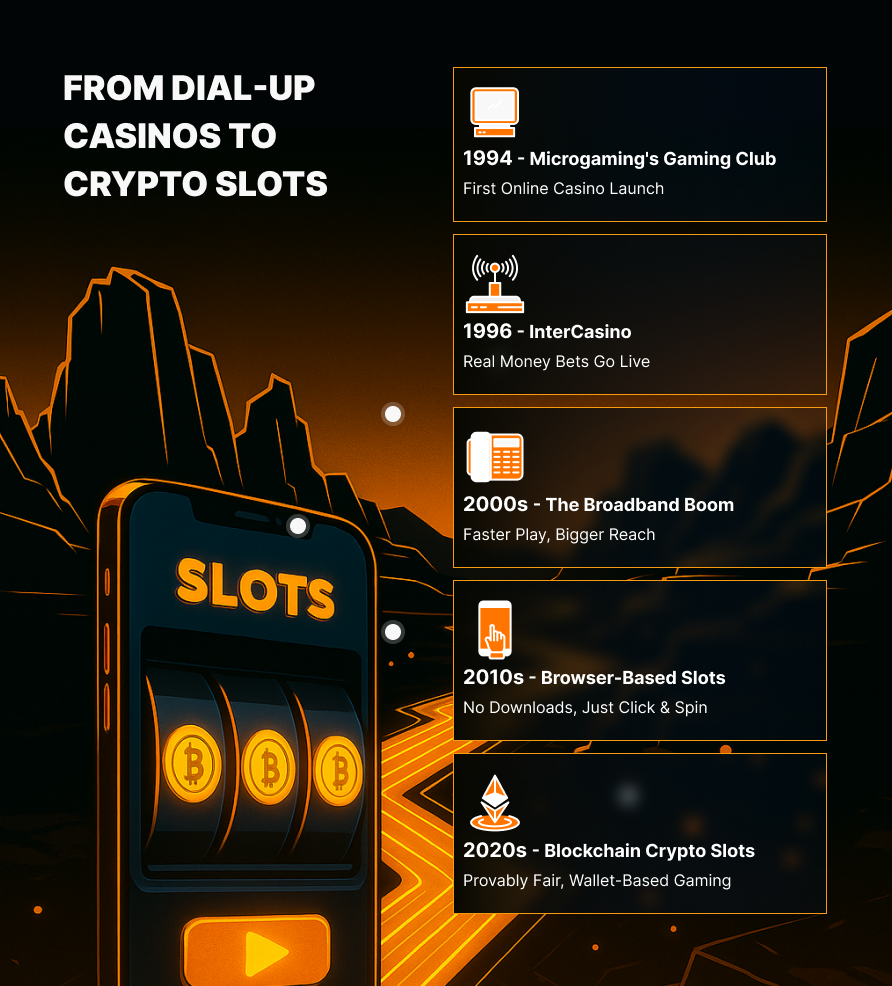
Although the internet had existed in some form since the 1970s, it wasn’t until the early 1990s that it started going mainstream. By this time, personal computers were beginning to become affordable for the middle classes and the first true browsers and search engines were making things accessible. Although the technology was still basic and the speeds were excruciatingly slow (try explaining the 12k dial-up browsing experience to a Gen Z), the potential for online gambling was becoming apparent.
In 1994, Isle of Man-based Microgaming revealed its Gaming Club platform, with the first true online casino, InterCasino, going live in 1996. In 1997 Casino-on-Net followed (now 888Casino) and by the end of 1998 around 700 online casinos were available. Boom! The age of online gambling had arrived. At the same time, numerous companies began developing online slots to provide to these casinos. However, due to technical limitations, most of the early online slots were simply digitized versions of existing land-based titles. They even had to be individually downloaded before they could be played.
However, with the explosive proliferation of internet access, plus rapidly increasing speeds - culminating with the availability of broadband in the early 2000s, those technical limitations gradually fell by the wayside and numerous new game studios entered the burgeoning online slots market. By the mid-2010s, online slots were becoming extremely sophisticated and routinely being played directly in browsers. Affordable smartphones and rapidly improving mobile internet access were also opening up vast new markets for online casinos - with players now able to enjoy their favorite slots from anywhere.
Of course, while all this was happening, the world was going through major dramas. There were the 9/11 attacks, the War on Terror, the Iraq War, the Afghan War, and the Financial Crisis. So, few people noticed when, in early 2009, a mysterious person known only by his pseudonym Satoshi Nakamoto launched an obscure digital money called Bitcoin. The age of crypto had dawned, and it would, eventually have a huge impact on the world of online gambling. As early as 2014, crypto casinos like BitStarz had entered the scene - allowing people to deposit with both fiat and Bitcoin, but it wouldn’t be until the early 2020s when true blockchain-based crypto slots started gaining popularity.
How Online Slots Work: The Basics
Generally speaking, whether you’re playing a traditional online slot or a crypto slot, the underlying mechanics are similar. This is great for players because it means you can easily transition between the two without a steep learning curve.
Random Number Generator (RNG)
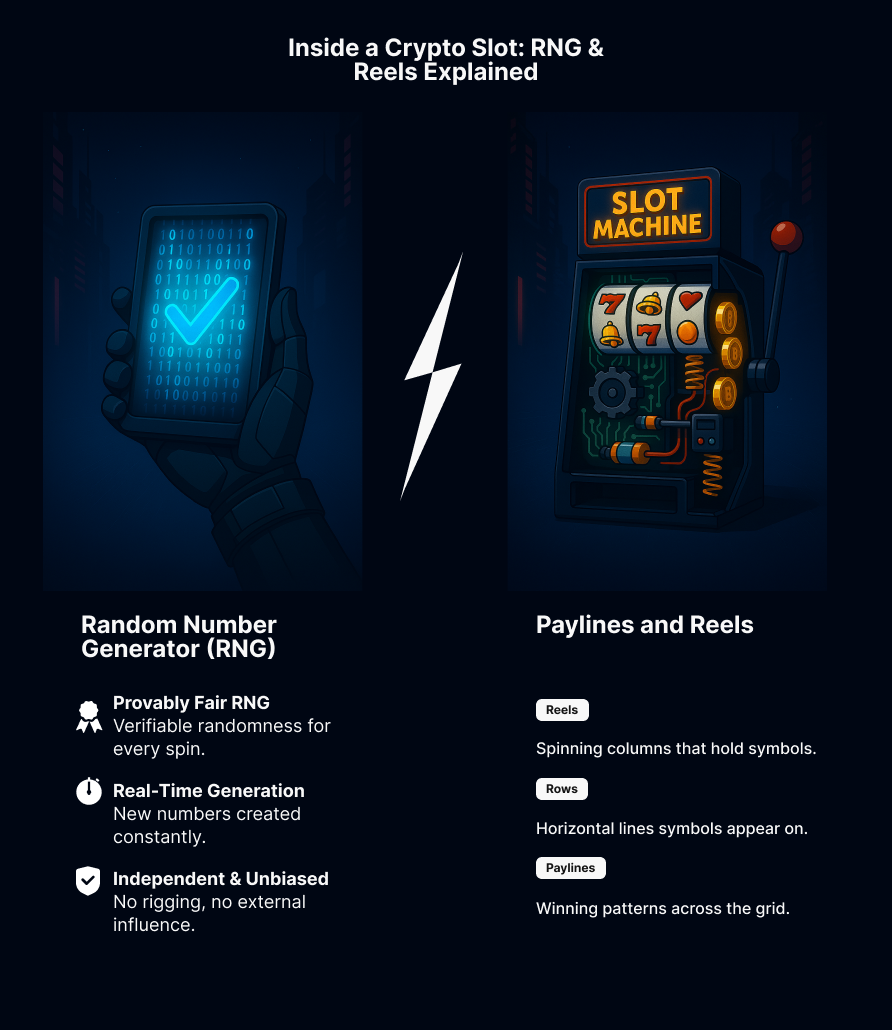
At the heart of every online slot is a Random Number Generator, or “RNG”. This is a software algorithm designed to ensure the outcome of each spin is genuinely random. In a nutshell, these work by constantly generating random numbers - even when the game isn’t being played - and when a player hits “spin” it will select a random number to generate the outcome.
A legitimate RNG will not be influenced by any external factors and will ensure each spin is completely independent of the previous one. The RNGs used by slots in many licensed jurisdictions must be certified and regularly tested to ensure they are delivering random results. Blockchain technology enables crypto slots to use “provably fair” RNG systems, which allow players to independently verify the randomness of each spin.
Paylines and Reels
The vast majority of online slots feature several “reels” (the vertical columns that spin - emulating the reels on physical slot machines) - each with a few rows of symbols displayed. Across these reels and rows will be a number of paylines. These are lines on which, if certain symbols land, a winning combination will be formed. Contemporary slots usually feature five reels and multiple paylines, offering more ways to win than their three-reel predecessors. However, some online slots feature many more reels, and even additional reels that aren’t even part of the main game display.
Common Symbols and Bonus Features
Today, you’ll find online slots with pretty much every visual theme you can think of, from ancient Egypt and Greek legends to science fiction and horror. However, most include either some or all of the following types of symbols and bonus features:
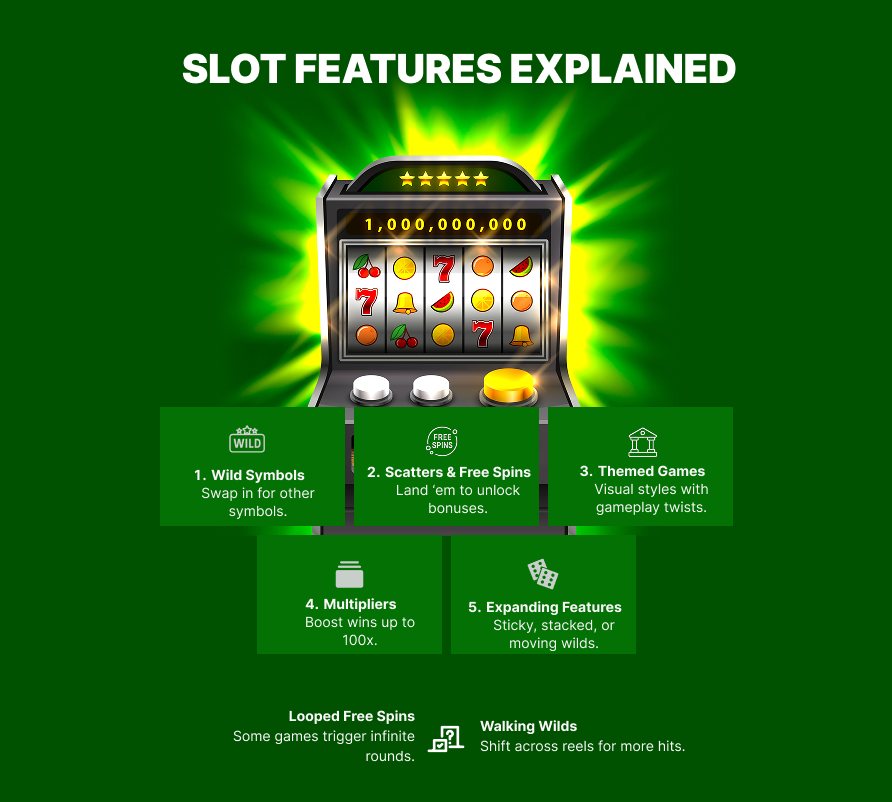
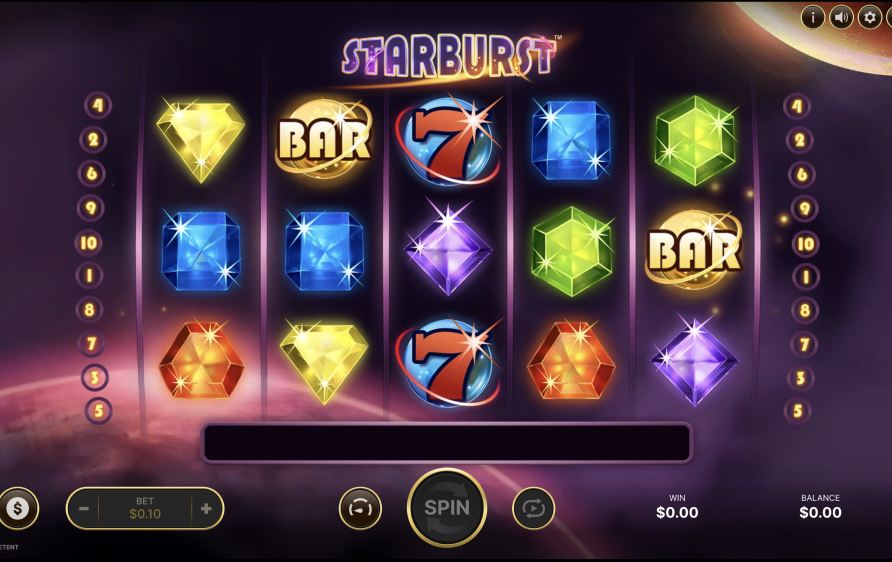
- Wild Symbols - These substitute for other symbols (normally except the Scatter), to complete winning combinations. Some games, like Golden Wheels of Egypt from NetEnt and Juicy Fruits from Pragmatic Play, feature “walking wilds”, which, after paying the initial win, continue moving left or right, forming new winning combos, until they leave the reels. Another variation is the “expanding wild”, which can grow to cover a whole reel - these are featured on games like NetEnt’s classic Starburst and Sunny Shores from Yggdrasil.
- Scatter Symbols - Landing a certain number of these will usually trigger special features like free spins and bonus rounds. Typically, landing 3 Scatters will trigger the minimum number of Free Spins, and sometimes Scatters are only available on a limited number of reels.
- Free Spins - Free Spins games often take place in a different visual environment - like a game within a game - and have extra features like multipliers. Some slots, like Wolf Gold from Pragmatic Play and Fire & Steel: War of the Wilds from BetSoft offer infinitely re-triggerable Free Spins.
- Multipliers - Multipliers are exactly what they sound like - a function that multiplies the value of a win. They can take many forms and appear in various guises. For example, a specific combo of specified symbols may result in a certain multiplier. Often, before starting a Free Spins round, you’ll be asked to choose something at random, to reveal a multiplier that will be added to all wins in the subsequent rounds.
- Respins - These allow you to win more after the initial winning combination has been paid for a spin. Usually, winning or specified bonus symbols will remain locked in place for a subsequent spin, and often this process will continue as long as you hit winning combos, or until the reels are filled with bonus symbols.
- Mini Games - Many slots feature extra mini-games to add depth and more winning opportunities. The most common of these is the “all or nothing” gamble game. This normally takes the form of a simple “red or black” card game, which allows you to double your wins if you guess the next color drawn correctly. Usually, you can continue with this game until you either collect your winnings or lose everything. Other slots feature min games as diverse as boat races or even opening coffins to stake sleeping vampires through the heart.
Return to Player (RTP)
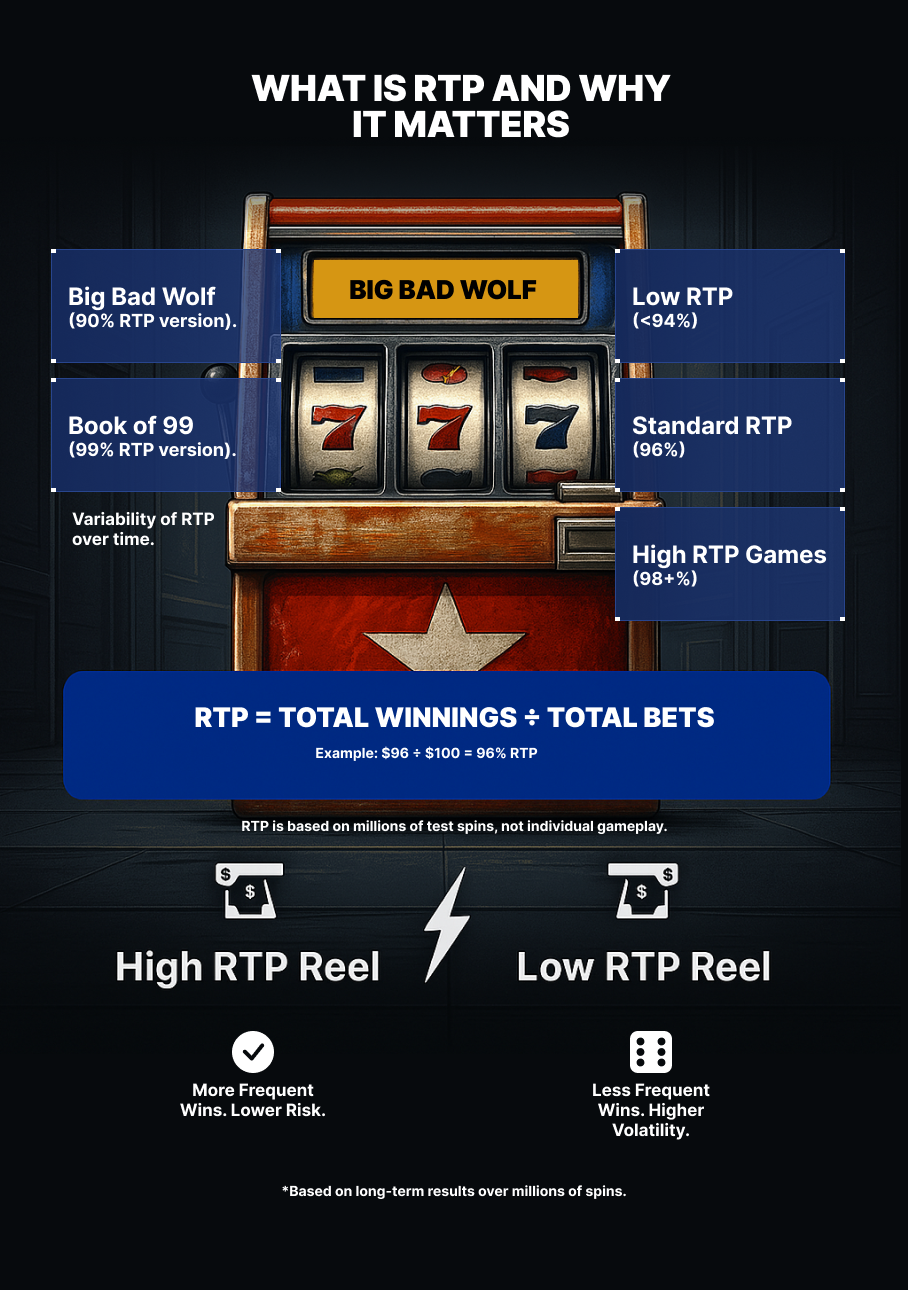
Something very relevant to online slots is the Return to Player (RTP) percentage. Put simply, this represents the amount of money a slot game will, theoretically, return to players over a long period. For example, a slot with an RTP of 96% will return $96 for every $100 wagered. Hence, playing slots with a higher RTP will, technically speaking, improve your chances of getting more money back via wins.
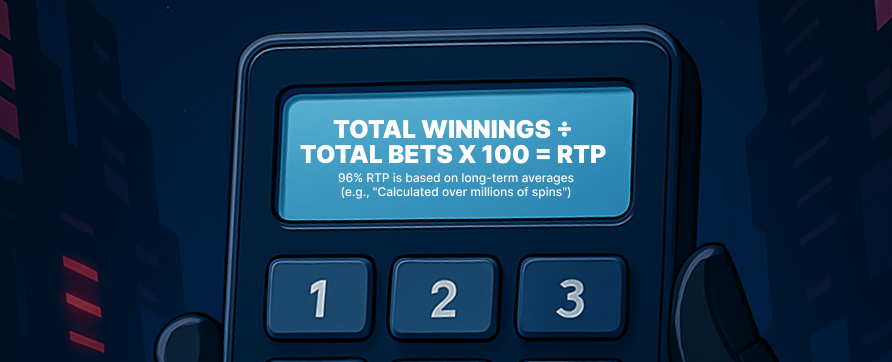
However, it is important to appreciate that RTP is calculated over millions of test spins. Of course, in reality, you’re not going to play millions of rounds, so the RTP you personally experience may be very different, resulting in significantly higher or lower returns in the short term.
Online slot RTPs typically vary from 90% to 98%, with most being around 95% to 97%. However, it is possible to find some, like Mega Joker from NetEnt and Book of 99 from Relax Gaming, offering RTPs of 99%. Most slots are released with a single RTP, but some games are released in multiple versions. For example, Quickspin released its Big Bad Wolf slot in two versions - one with an RTP of 90% and one with 97%. This is why you’ll sometimes find conflicting information in online slot reviews.
Although reputable online casinos, like those licensed by the UK Gambling Commission (UKGC), Malta Gaming Authority (MGA), and Curacao Gaming Control Board (GCB) aren’t allowed to alter the RTP of slots, the practice has been known at some unscrupulous unlicensed casinos. This is why the transparency of blockchain-based slots, with their verifiable results and RTP rates, is a big advantage.
You can find out more about RTP in the exclusive CoinBets guide to Understanding RTP in Crypto Casinos: How It Affects Your Chances of Winning.
Understanding Regular Slots vs. Jackpot Slots
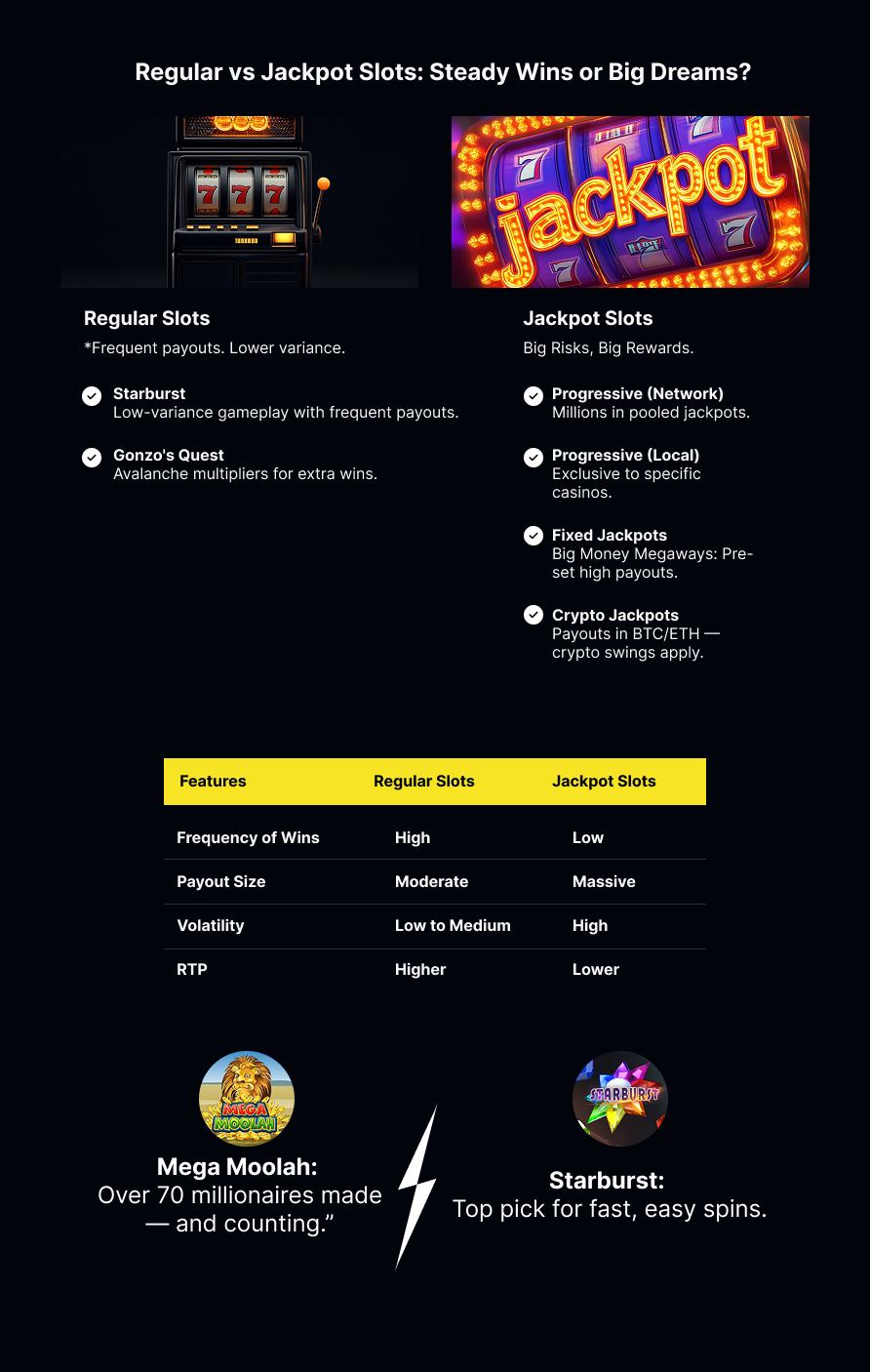
Online slots can be sorted into two main types - regular slots and jackpot slots. Both use similar base mechanics, but their payout structures and winning potential can vary significantly.
Regular Slots
These slots offer consistent payouts based on set paylines and winning combinations. These will all be detailed in the paytables available via the info panel of the game. While the volatility of individual games can vary, and maximum wins can still be very substantial, they are aimed at players who appreciate more frequent, small wins rather than huge life-changing jackpots.
Even so, there’s a massive variety of non-jackpot slots. For example, let's take two from one of the world’s most popular slot providers, NetEnt:
- Starburst - An all-time classic released in mid-2012, this game was designed to offer simple, low-variance gameplay with plenty of regular payouts. This has made it one of the most popular slots ever with casual players.
- Gonzo’s Quest - Released a year before Starburst, NetEnt took a completely different approach, adding unique features like the Avalanche multiplier, where winning symbols explode and new ones fall into their place, creating new winning combos in a single round.
Jackpot Slots
While regular slots can offer big wins (for example, Starburst XXXtreme lets you win up to 200,000x your bet), jackpot slots offer the potential of lottery-level life-changing wins. However, they typically have much lower RTP rates and are less likely to pay out frequent small wins.
- Progressive Jackpots (network) - In these games, the prize pool increases with every spin that happens on a game or group of games across a large network of players (which can include hundreds of online casinos). A certain portion of each bet gets added to the jackpot until a player triggers it by landing a specific combination of symbols or winning a bonus round.
The most famous example is the Mega Moolah series of progressive jackpot slots originally developed by Microgaming and now marketed by Games Global. In 2024 alone, there were individual Mega Moolah jackpot wins of $3,657,746 in October, $5,248,103 in September, CA$3,637,742 in June, €7,004,235 in May, and €6,689,308 in February. - Progressive Jackpots (local) - These work the same ways as network progressive jackpots, but only players from a specific casino (or small group of casinos run by the same operator) contribute to the jackpot. Hence, the sums available will be smaller. A good example is Divine Fortune from NetEnt. This game offers both minor and major jackpots, with the jackpot wins ranging from around $20K to $500K.
- Fixed Jackpots - Instead of being linked to the spins of a network of players, these games offer fixed jackpots - often several. Examples of these include 7 Clovers of Fortune from Pragmatic Play and Big Money Megaways from BluePrint Gaming. In these games, the jackpots are set by the game provider and tend to be relatively small.
- Crypto Jackpot Slots - While these function in a similar way to any of the jackpot slots listed above, they payout in cryptocurrencies like Bitcoin (BTC), Ethereum (ETH), or Dogecoin (DOGE). The inherent volatility of cryptocurrencies adds an extra layer of excitement because the value of jackpots and wins can increase (or decrease) dramatically.
Unique Features of Crypto Slots
Though they share a lot of similarities with traditional games, crypto slots do bring several innovative features to the table, including:
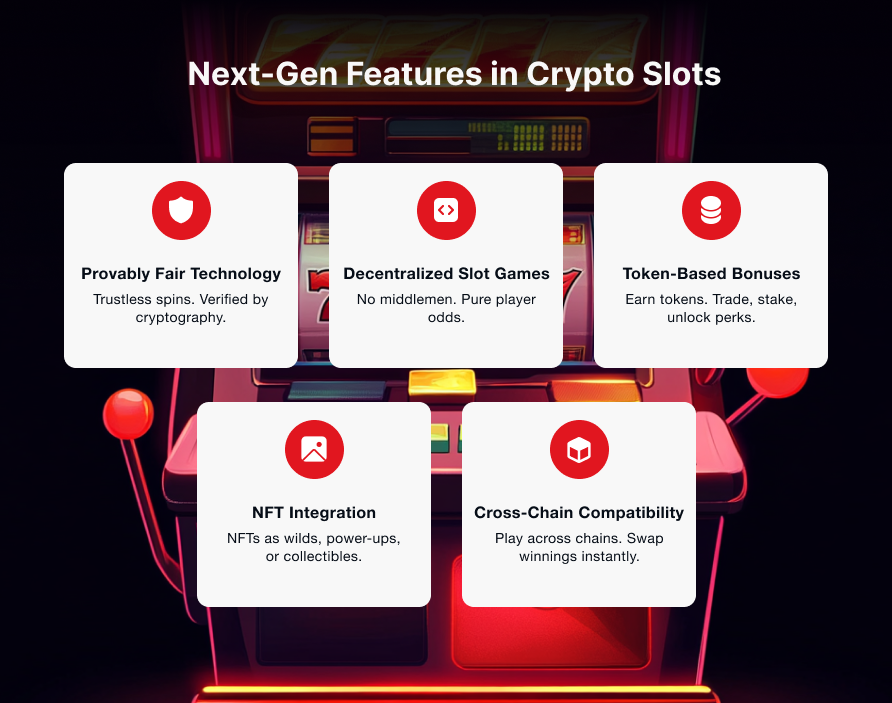
Provably Fair Technology
The most significant advantage of crypto slots is their use of provably fair technology. This means you don’t have to put your faith in any third party regarding the fairness of the RNG, i.e., it allows “trustless” gaming. When playing crypto slots and other provably fair casino games, you can personally verify the fairness of each round using cryptographic hashes. Needless to say, this level of transparency helps build trust between players and casino operators.
Decentralized Slot Games
While most crypto casinos are still centralized to a significant extent because they are run by an operating company, some are now fully decentralized. This means games run directly on the blockchain with no need for any intermediaries at all. Smart contracts replace all third-party responsibilities, thus significantly reducing operational costs and allowing for a higher RTP/lower house edge.
Token-Based Bonuses
While traditional online casinos are limited to offering simple bonuses like deposit matches and free spins, crypto casinos have much more flexibility. They can offer bonuses in native platform tokens (for example, TG.Casino offers cashback for wagering using its native $TGC token), use tokens to unlock exclusive game features, and even offer players the ability to earn income through staking. For more about this, you can check out the exclusive CoinBets guide Tokenomics in Gambling: How Crypto Tokens are Revolutionizing Rewards and Payouts.
NFT Integration
Some crypto casino projects have taken things even further by integrating Non-Fungible Tokens (NFTs) into gameplay. In this context, NFTs can become collectible symbols, unique reel characters, and even triggers for bonus features. However, despite the clear potential of NFTs, attempts to integrate them with crypto slots have proven troublesome - illustrated by regulatory problems faced by projects like Sloties and Sands Vegas Casino. Despite this, other NFT gambling projects, like Lucky Lions Den are pressing ahead.
Cross-Chain Compatibility
As the crypto and blockchain space matures, cross-chain interoperability is becoming increasingly important. Via solutions like cross-chain bridges, different blockchains, for example, Ethereum and Cardano, can interact. In terms of crypto slots, cross-chain compatibility enables players to play with, and convert winnings into, a choice of cryptocurrencies. This improves accessibility and significantly expands the potential market.
Why Crypto Slots Stand Out: The Key Advantages
As we’ve seen, crypto slots can offer a wide range of exciting technical features, but they also offer several other advantages to both crypto enthusiasts and traditional online gamblers alike.
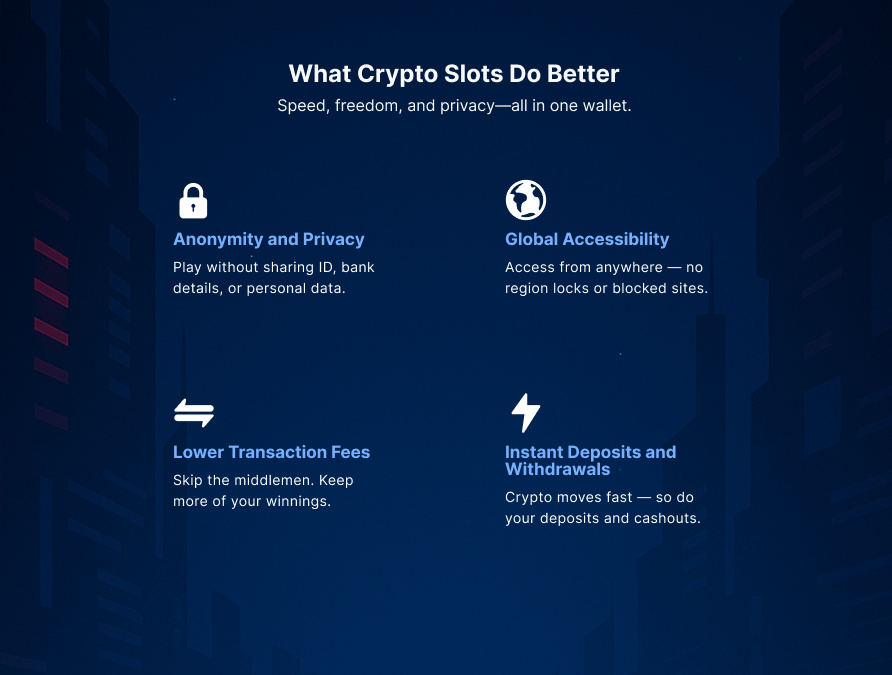
- Anonymity and Privacy
One of the most appealing aspects of crypto in general is the privacy it offers users compared to traditional payment methods. Choosing to play crypto slots at a crypto casino can mean you don’t have to hand over personal information or complete intrusive identity verification. - Global Accessibility
Fully decentralized online casinos and slots are not physically based in a specific legal jurisdiction, and so can serve players based anywhere. This is particularly significant if you happen to live in a country or region where access to traditional online casinos is limited or banned. - Lower Transaction Fees
Blockchain technology and cryptocurrencies mean casinos can avoid using expensive third-party payment processors and systems like banks and card networks. This greatly reduces costs and can result in significantly cheaper deposits and withdrawals. - Instant Deposits and Withdrawals
Again, because using crypto can completely bypass banks and traditional payment networks, it can result in much faster transactions. For example, while a withdrawal using a Visa or Mastercard debit card often takes 2-5 business days, a crypto withdrawal can be virtually instant.
Why Crypto Slots Haven’t Taken Off Yet: The Key Drawbacks
Okay, by this point, you’re probably thinking, “So, if crypto slots are so great, why aren’t they super popular yet?” Well, the truth is, despite all the advantages they offer, there are still some major hurdles to clear.
- Complexity and Learning Curve - For anyone interested in crypto, it can feel like it’s perfectly normal by now. But for those still unfamiliar with crypto, using a crypto casino and crypto slots means learning about crypto fundamentals like setting up a wallet, purchasing crypto, and finding and navigating decentralized platforms.
- Limited Accessibility and Adoption - Although Bitcoin was launched way back in early 2009, in reality, we’re still in the early days of the crypto age. When it comes to online gambling, crypto still represents a small portion of the overall market, with the majority of players perfectly happy to use the established casinos and payment methods they are used to. Indeed, according to Statista, although the global online gambling market is expected to be worth over $70 billion in 2024, crypto gambling will likely only generate around $250 million of that.
Popular Slots
Over the past three decades, thousands of online slots have been developed and released - far too many to cover here - but we can take a quick look at some particularly popular titles of the past few years.
Traditional Online Slots
Starburst XXXtreme, NetEnt
Released in July 2021, almost a full decade after the original Starburst, this long-awaited sequel shares a similar visual theme. But, while the original slot was a low-variance game famous for paying out plenty of small wins and lots of free spins, Starburst XXXtreme is a highly volatile beast with an RTP of 96.26%.
Still, the gameplay does share some similarities, with Wilds being at the center of the action. In fact, there are two types of Wild symbols; random and regular. They only appear on the middle three reels but can expand to cover them, and if they do, they remain locked for the next spin. The random Wilds can appear after respins and can deliver potentially huge multipliers - ranging anywhere from 2x to 150x. The result, you can potentially win up to a staggering 200,000x your bet.
San Quentin xWays: NoLimit City
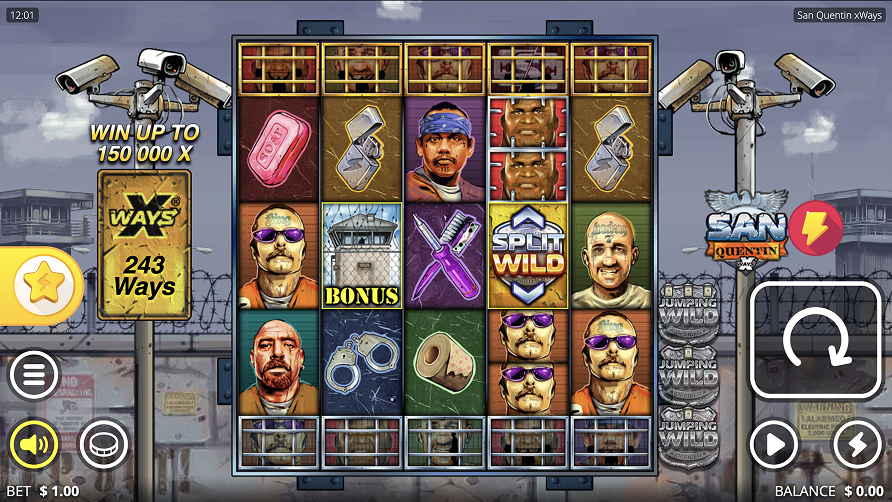
Famous for its visually gritty slots with controversial themes, NoLimit City has made a couple of games set in famous prisons. The first was San Quentin xWays, released in January 2021, followed by Folsom Prison later in July. San Quentin takes its name from the oldest prison in California and is a 5-reel, 243-pay way, extremely volatile monster of a slot.
You’ll need patience to play this game because the wins are few and far between - adding to the feeling of serving time inside. But, if you can hold out, and avoid getting shanked (or picking up the soap), then the features of this game can pay in style. The “Enhancer Cells”, when unlocked, reveal surprises like Wilds, Razor Splits (double all the symbols on the reel), or xWay symbols that deliver stacked pay symbols. But, the real action starts with the free spins, aka “Lockdown Spins”, which feature “Jumping Wilds” and extra multipliers.
Traditional Jackpot Slots
Mega Moolah: Microgaming/Games Global
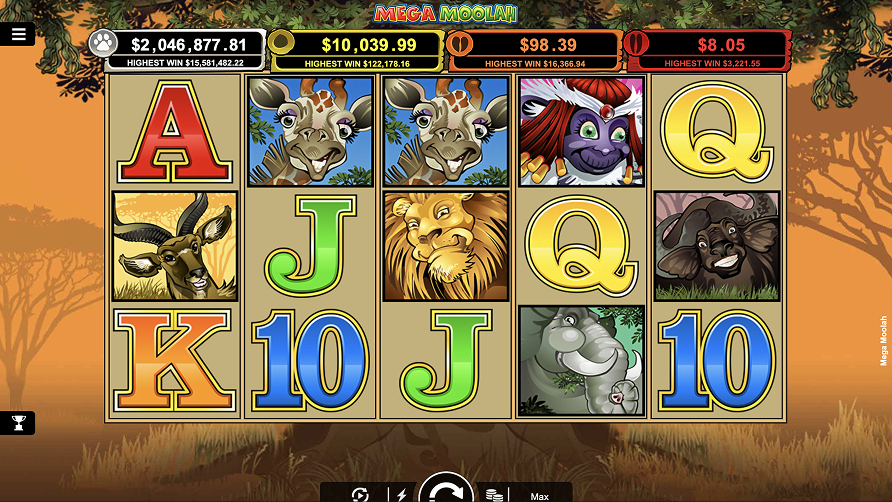
The most famous of all progressive jackpot slots, Mega Moolah was released way back in 2006 by Microgaming. It’s an African safari-themed 5-reel slot with just 25 paylines and a very low RTP of just over 88%. So, you might be wondering why a visually dated, basic, low RTP slot is still hugely popular almost two decades after launch. Well, the answer is simple: huge jackpots. And, I mean really huge - I’ve already mentioned some of the multi-million dollar jackpots won on the game in 2024, but in 2015, a certain Jon Heywood from Cardiff in the UK, won €17,879,645 while playing Mega Moolah at Betway.
Today, the Mega Moolah brand is owned and developed by Games Global. In addition to the original slot, the Mega Moolah progressive jackpot network now also includes games like Atlantean Treasures Mega Moolah, Absolootly Mad Mega Moolah, Roulette Mega Moolah, Immortal Romance Mega Moolah, Thunderstruck II Mega Moolah, and Gold Factory Jackpots Mega Moolah. A portion of wagers from all these games gets added to the single Mega Moolah jackpot fund.
7 Clovers of Fortune: Pragmatic Play
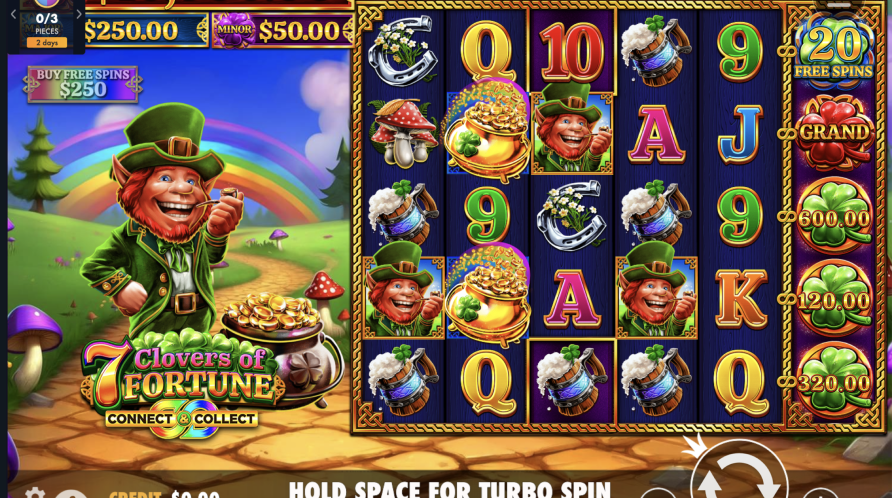
A 6-reel fixed jackpot slot with 1,875 paylines and a high volatility rating, 7 Clovers of Fortune is a recent release from Pragmatic Play, debuting in October 2024. As the name suggests, visually it's got a “Luck of the Irish” theme, complete with a leprechaun and rainbow, which is complemented by a suitably Celtic soundtrack. The stated RTP is 96.47%, and it has a medium volatility rating, striking a good balance between win size and frequency.
Gameplay-wise, 7 Clovers of Fortune features the Connect & Collect mechanics, with the Connect & Collect symbols appearing on reels 1 to 5 and offering cash values of between 04x and 50x your bet. Connections can form chains horizontally and vertically and award the cash values shown, plus any special bonuses they intersect with on reels 3 or 6. Those specials include respins, multipliers, additional wilds, free spins, or the Minor, Major, and Grand jackpots.
Popular Crypto Slots
Brave Viking: BGaming
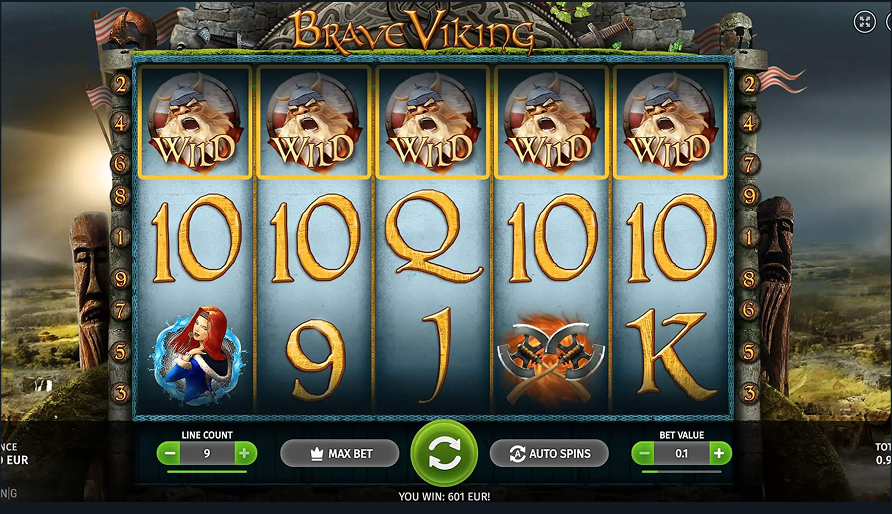
Released in 2016, this 5-reel slot is one of the growing number of provably fair games from BGaming - one of the first mainstream providers to offer true crypto slots. It has a reasonable 97.09% RTP and volatility is rated medium-high. Visually, its graphics and symbols are, well, Viking-inspired as you’d expect, and stand up pretty well given the original game’s age.
When it comes to gameplay, there’s a Wild symbol (Viking warrior) that substitutes for any symbol except the Scatter and doubles winnings on a payline. Landing 3, 4, or 5 Scatters triggers 5, 15, and 50 free spins respectively - and they are re-triggerable. Plus, if you land 2 bonus symbols on reels 2 and 4, you’ll get to choose one of three longships for a top-down boat race in the bonus game. If your ship wins the race, your bet will be multiplied by 100. All in all, Brave Viking shows how regular online slots can be released as provably fair crypto games relatively easily.
Aviator: Spribe
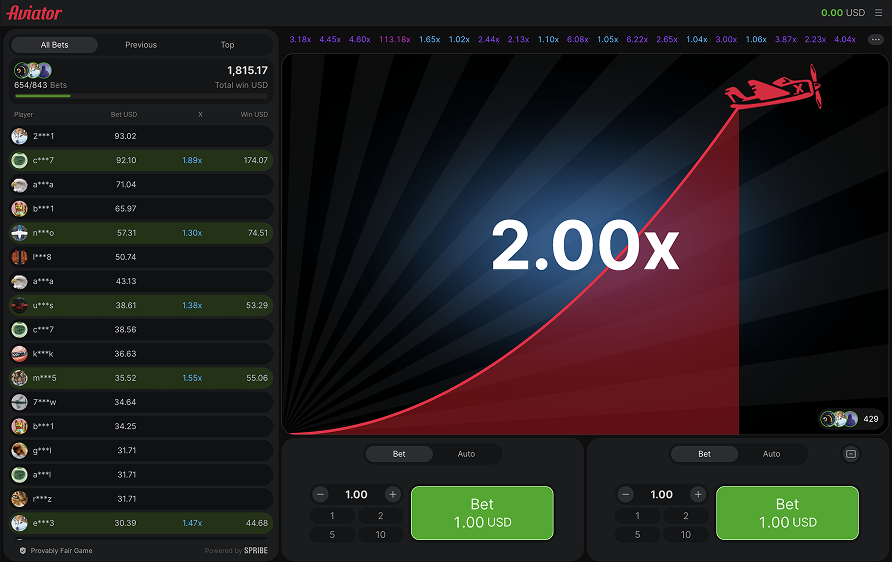
One of the most popular crash-type games, Aviator puts a slightly different twist on things, because instead of cashing out before the plane crashes, you need to cash out before it flies away. Altogether more uplifting! Like other crash games, the longer the plane flies on screen, the higher the multiplier to your bet will climb. The trick is cashing out before the plane zooms away and you lose it all.
Again, like other crash games, you initially set a bet amount and cashout multiplier, but you can also manually bail at any point before that if you lose your nerve. It sounds simple, but it’s a fast-paced and highly entertaining game, even if the graphics aren’t as sophisticated as the latest video slots. Being blockchain-based, Aviator is provably fair, so anyone can check the outcomes are genuinely random.
How to Get Started with Crypto Slots
Making the switch from playing traditional online slots to crypto slots is easy - but there are a few things you’ll need to consider first.
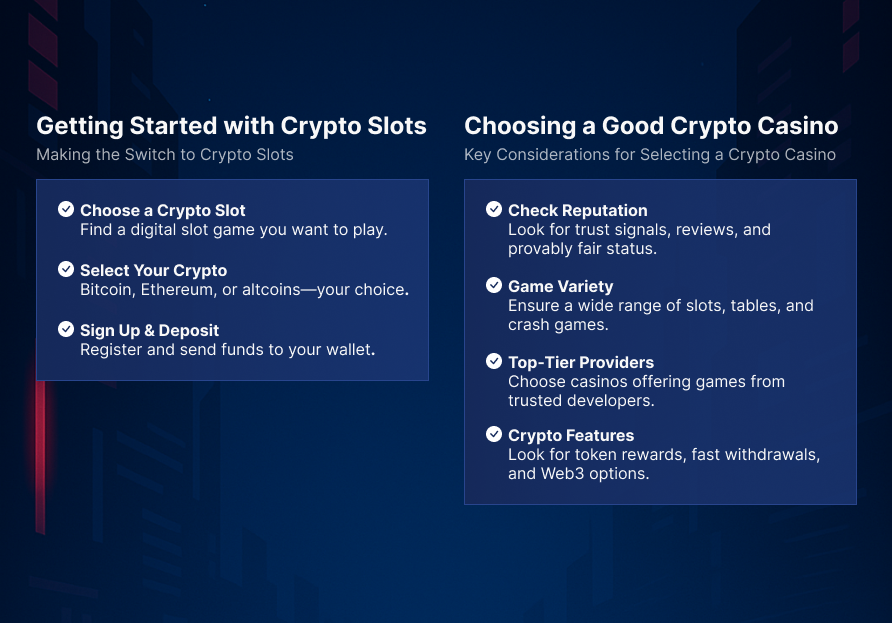
Choosing a Good Crypto Casino
To play crypto slots, you’ll need to have an account at a crypto casino. However, not all crypto casinos are created equal, so you should keep the following in mind:
- Reputation - Research both professional and player reviews (like the ones right here at CoinBets) to establish which crypto casinos are trustworthy and safe. Ideally, a casino should hold a reputable gaming license and provide details of audits from trusted test labs.
- Game Selection - Look for a wide variety of regular and jackpot slots, including crypto slots and provably fair games. Depending on your playing preferences, table games, and live dealer games may also be a plus.
- Game Providers - Major crypto casinos should offer games from a mix of large well-known and smaller independent game providers, along with in-house originals.
- Bonuses and Promotions - Welcome bonuses can be great, but the terms and conditions should be transparent and reasonable. Crypto casinos often advertise massive bonuses, but things like high wagering requirements often put them beyond the reach of most players.
- Crypto-Specific Features - If you want a true crypto casino experience, consider fully decentralized casinos that employ tokenomics ecosystems and are run by DAOs (Decentralized Autonomous Organizations) rather than traditional operating companies. However, these may not be the best choice if you’re new to the world of crypto gambling.
Setting Up a Crypto Wallet
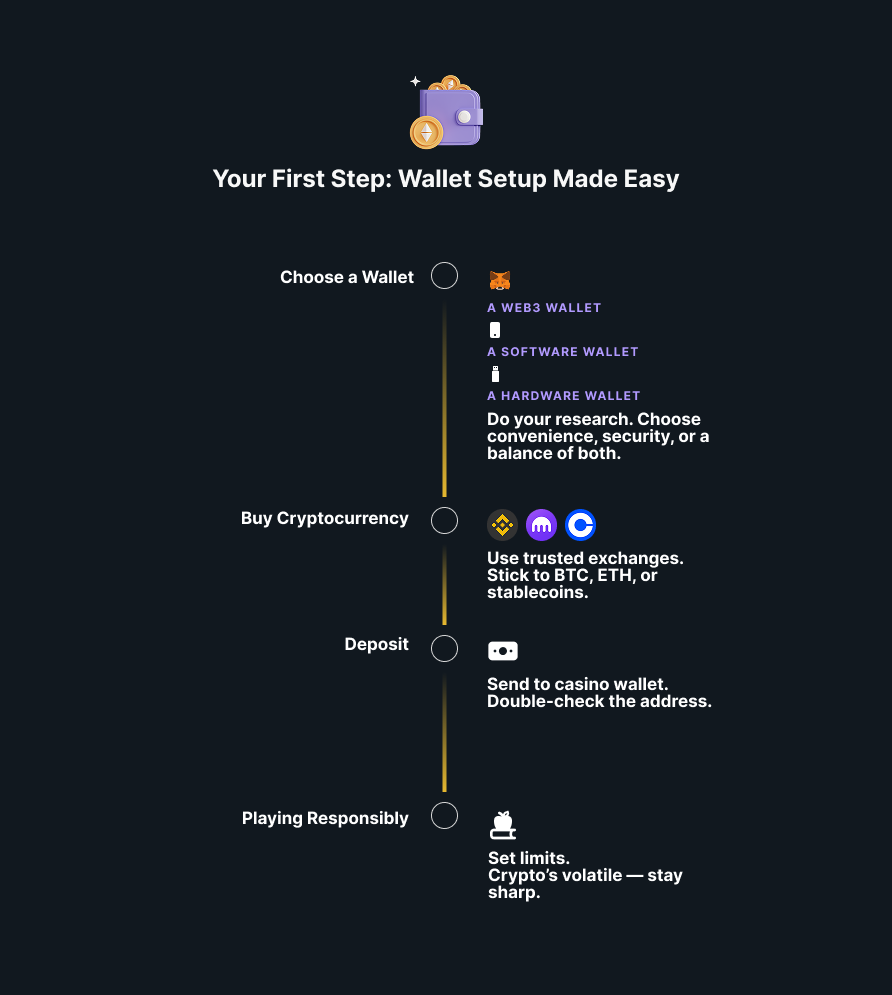
If you don’t already have a crypto wallet, you’ll need to get one set up. If you do have some crypto, but are keeping it in an exchange-based wallet, it’s also a good idea to set up a non-custodial wallet that you fully control (even huge regulated crypto exchanges can collapse - remember the FTX debacle!).
1. Choose a Wallet
Web3 software wallets like MetaMask and Trust Wallet are easy to set up and can be linked directly to many crypto casinos, however, they aren’t the most secure. Software-based wallets like Exodus are free, convenient, easy to use, and more secure. Or, for the best security, you can go with a hardware wallet like Ledger or Trezor. There are many crypto wallets out there - do some research, read reviews, and choose one that best suits your needs.
2. Buy Cryptocurrency
Once you’ve got a crypto wallet, you’ll need some crypto to put in it. You can easily buy this from any major centralized exchange (CEX), or a decentralized exchange (DEX). However, for beginners, a CEX is strongly recommended because the user experience is far easier. Popular CEXs include Binance, Kraken, Coinbase, and MEXC, though there are many, many others.
When choosing which crypto to buy, you should check which cryptos the casino you want to play at accepts. While Bitcoin (BTC) and Ethereum (ETH) are accepted at most crypto casinos, you may want to consider stablecoins like Tether (USDT), and altcoins like Litecoin (LTC), Bitcoin Cash (BCH), Dogecoin (DOGE), and Cardano (ADA). Stablecoins protect against crypto price volatility, while lighter altcoins can offer much cheaper and faster transactions.
Also, make sure the crypto that you purchase is supported by the crypto wallet you’re going to use. When you’ve purchased your crypto, it’s a good idea to transfer it to your non-custodial wallet (like Metamask, Exodus, or Trezor). It will be safer than leaving it in your exchange-based wallet.
3. Deposit
If you’re using a Web3 wallet like MetaMask you may be able to connect your wallet directly to the crypto casino. If not, you’ll need to transfer crypto from your existing wallet to your casino wallet. To do this, log in to the casino, select “Deposit”, choose the type of crypto you want to deposit, and specify the amount. You will be provided with a unique deposit address in the form of a string of numbers and letters and also a QR code. Send the appropriate amount of crypto from your wallet to this address.
Note: The speed and fees (gas fees) of a crypto transaction can vary depending on the crypto being used and network congestion. You will be provided with an estimate of fees before you confirm the transaction
4. Playing Responsibly
For most people, gambling is an enjoyable form of entertainment, but it can get out of hand surprisingly quickly. So, whether you’re gambling with crypto or fiat currencies, it's important to do so responsibly.
- Manage Your Bankroll - Set a budget and stick to it. Never gamble more than you can afford to lose
- Understand Volatility - Some slots will tend to pay frequent small wins (low volatility), while others will tend to pay less frequent but bigger wins (high volatility). It’s important to appreciate the type of slot you’re playing and choose those that best suit your personal risk tolerance
- Know When to Walk Away - Never chase your losses. This is the number one way people lose control and get in a mess. You’re not going to increase your chances of winning any specific spin by playing more (remember, each one is completely random). If things aren’t going your way and you’ve spent your bankroll, walk away and try another time.
- Never Play Under the Influence of Alcohol or Drugs - Gambling while intoxicated can be extremely dangerous because you probably won’t be thinking rationally enough to keep the previously mentioned points in mind.
Conclusion
The benefits offered by crypto slots compared to traditional online slots are certainly compelling, and large game studios are starting to pay more attention to the space. As for the crypto casinos themselves, most, like BC.Game, Stake, Gamdom, and BitStarz, aren’t yet truly decentralized - but are rather platforms operated by traditional companies that have integrated elements of decentralized technology, like provably fair games and crypto payments. This means we have a situation where, even at crypto casinos, the vast majority of slots are still of the traditional type. Indeed, the combination of relatively steep learning curves, regulatory hurdles, and the fact that traditional online casinos are so entrenched, will act as a strong headwind on progress.
However, as the use of cryptocurrencies becomes more common in the wider world, and more people become comfortable interacting with decentralized technologies, this will change. By incorporating more and more decentralized elements into their platforms, crypto casino operators can reduce business costs and be more competitive. At the same time, fully decentralized casinos, governed by DAOs and offering only blockchain-based crypto slots and casino games, will only become more popular. Gradually, as younger generations, who’ve grown up with crypto, enter the gambling market en masse, the speed of change will only accelerate. But, for the next few years at least, the online gambling space will see traditional, hybrid, and fully decentralized platforms and games co-exist.
One thing is for sure, whether you're new to the space or a crypto enthusiast, it’s an exciting time to be involved with online gambling! I hope you’ve enjoyed this original CoinBets guide, and please feel free to share your thoughts and experiences.